Wine Storage Cabinet: The Complete Guide to Choosing, Sizing, and Building One
A wine storage cabinet is a piece of furniture built to hold and protect wine bottles, usually with angled racking that stores bottles on their side, and often with temperature and humidity control for longer-term aging. The right one keeps your bottles at a stable temperature between 55 and 58 degrees, blocks UV light, and adds a serious upgrade to your dining room, kitchen, or bar area. In this guide, I'll walk through the types, the sizes, the features worth paying for, and the ones you can skip. I've built custom wine cabinets for Middle Tennessee homeowners for over a decade, and the framework below is what I use with clients on every project.
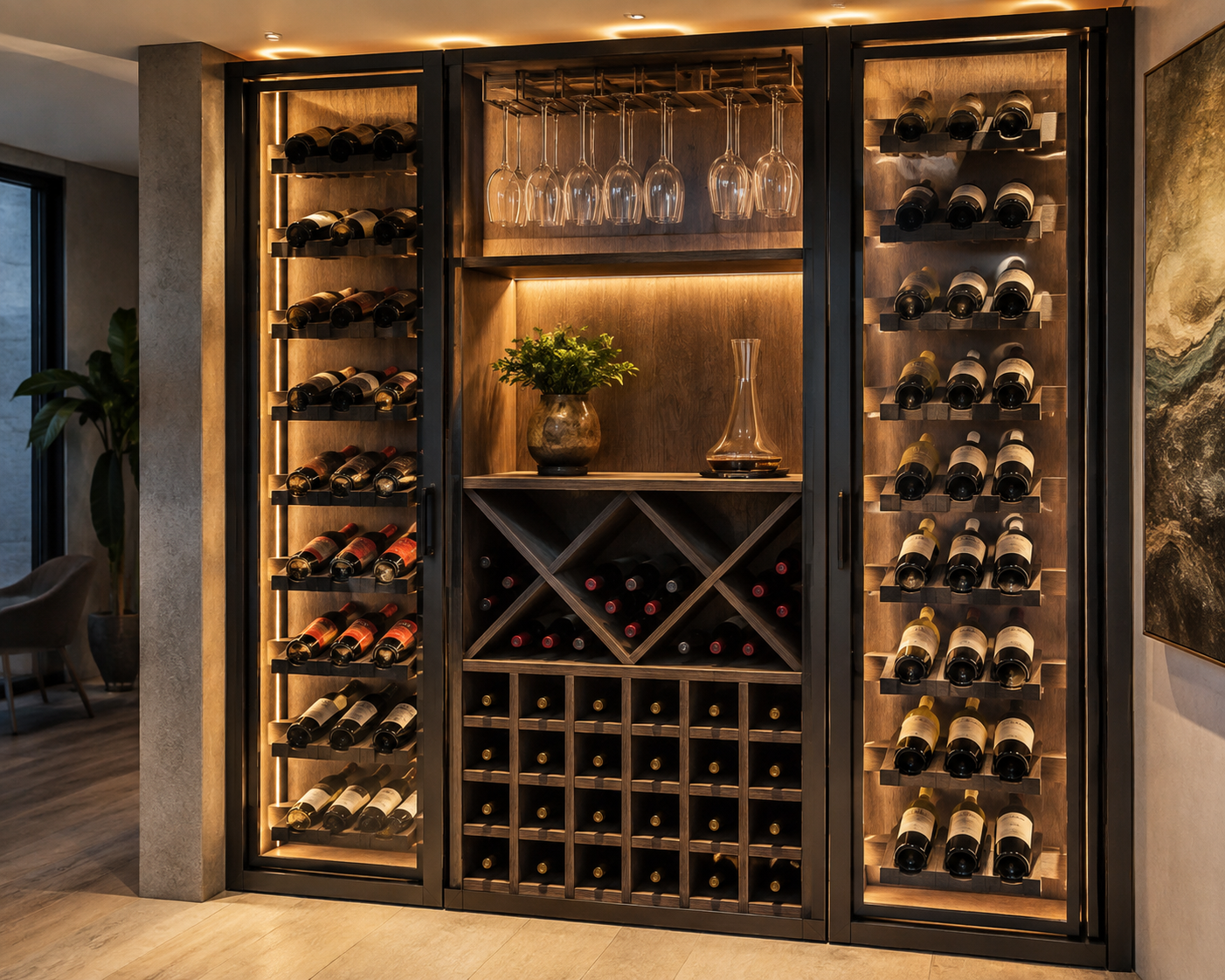
Wine Storage Cabinets: The Main Categories
Wine storage cabinets fall into three broad categories. Freestanding furniture pieces, which look like a sideboard or bar and hold bottles at room temperature. Built-in temperature-controlled units that function like a small refrigerator dedicated to wine. And custom-built cabinetry that integrates racking into your existing kitchen, dining room, or bar design. Which one is right depends on how much wine you own, how long you plan to keep it, and how much you care about the room's look.
Wine Cabinet with Storage: More Than Just Bottles
A wine cabinet with storage adds cabinet space for glasses, decanters, bar tools, and bottles of spirits alongside the wine racking. It's the version most homeowners actually want, because a dedicated wine-only cabinet uses a lot of floor space for a single purpose. Look for one with an upper display area for glassware and a lower cabinet with drawers or shelves for accessories. Our kitchen buffet cabinet guide covers similar dual-purpose pieces.
Bar Cabinet with Wine Storage
A bar cabinet with wine storage combines a full home bar with wine racking in one piece. The typical layout has a bar work surface at counter height, upper storage for spirits and glasses, and a lower section with wine racks or a small refrigerated wine drawer. Bar cabinet wine storage designs work best against a dining room wall where you can plug in a small chiller unit if needed. See our wet bar vs dry bar post for the layout differences.
Bar Wine Storage Cabinet Sizing
A bar wine storage cabinet needs at least 60 inches of wall length to feel functional. That gives you 24 inches for a bar prep area, 18 inches for bottle storage, and 18 inches for a glass rack. Under 48 inches, you're better off with a wine-only cabinet or a wall-mounted bar rack, because the combined bar wine storage cabinet compresses everything so tightly nothing works well.
Wine Cabinet Storage: Capacity Ranges
Wine cabinet storage capacities I most commonly build fall into four ranges. Small cabinets hold 20 to 40 bottles and fit almost anywhere. Mid-size cabinets hold 60 to 100 bottles and usually run 36 to 48 inches wide. Large wine storage cabinet builds go up to 200 bottles and typically require a dedicated wall or corner. Custom wine storage cabinets can hit 300+ bottles when integrated into a wall run, though most homeowners overestimate how much wine they'll ever actually keep on hand.
Wine Glass Storage Cabinet Design
A wine glass storage cabinet uses inverted rails on the underside of a shelf to hang stemmed glasses upside down, holding the bowl steady while the stem hangs free. Cabinet wine glass storage this way keeps the bowl free of dust and displays the glassware. For flat-bottom glasses, standard shelves work fine. The wine and glass storage cabinet combination is the most useful format because you can pull a glass and a bottle from the same piece of furniture.
Storage Wine Cabinet vs Wine Refrigerator
The main choice a lot of buyers face is a storage wine cabinet versus a wine refrigerator. A cabinet stores at room temperature and works fine for wine you plan to drink within a year. A refrigerated unit runs a compressor to hold 55 degrees for long-term aging. If you own more than $500 of wine or plan to hold bottles longer than 18 months, spend the money on a wine and storage cabinet with cooling. If you're a casual drinker, uncooled works fine.
Wine and Bar Storage Cabinet: Layout Rules
A wine and bar storage cabinet works best when the bar prep zone sits at 42-inch counter height and the wine racks sit below or behind the prep surface. Glassware hangs above at eye level. Bottles of spirits get their own dedicated shelf so labels face out. The wine bar storage cabinet layout keeps the working surface clear during entertaining while everything you need stays within arm's reach.
Wine Storage Cabinet with Doors
A wine storage cabinet with doors protects bottles from light, which is the second biggest enemy of wine after temperature. UV rays break down flavor compounds over time, especially in white and rosé wines. Solid wood doors give the most protection. A wine storage cabinet with glass doors looks more premium and displays your collection, but choose tempered UV-filtered glass if you're storing anything you plan to keep more than two years.
Bar Cabinet Wine Storage vs Dedicated Wine Cabinet
Bar cabinet wine storage suits homeowners who entertain and want everything visible and reachable. A dedicated wine cabinet suits collectors focused on preservation. If you drink wine two nights a week, bar cabinet configurations serve you better. If you buy wine as an investment, go dedicated to climate control.
Wine Storage Cabinets Temperature Controlled
Wine storage cabinets temperature controlled units maintain 55 to 58 degrees at 60 to 70 percent humidity, which is the range that lets wine age slowly and correctly. Look for a compressor-based cooling system rather than thermoelectric, since compressors handle Tennessee summers better and hold humidity more consistently. Dual-zone temp controlled wine storage cabinets let you keep reds at 58 degrees and whites at 50 degrees in the same unit.
Cabinet Wine Storage in Existing Kitchens
Cabinet wine storage doesn't have to mean buying a new piece of furniture. A run of x-shaped wooden racking installed inside an existing base cabinet turns a standard cabinet into wine storage. A pull-out wine drawer with individual bottle slots works even better because you don't have to reach past bottles to grab the one at the back.
Whitmore Bar Cabinet with Wine Storage and Named Retail Options
Whitmore bar cabinet with wine storage, Members Mark Moberly bar cabinet with wine rack storage, Maxine large walnut wood wine bar cabinet with storage, Boahaus expandable bar cabinet with wine storage, Hedon bar cabinet with wine, and Brentley wine storage cabinet all show up in retail searches. They're mass-produced pieces from Costco, Wayfair, and similar retailers. They work as budget options, though the racking is typically MDF or engineered wood rather than solid, and none of them include cooling.
Best Wine Storage Cabinet: What to Look For
The best wine storage cabinet for most homeowners has four features. Solid wood construction, especially for the racking that touches the bottles. A door with UV protection or full solid construction. Adjustable shelving or modular racking so you can reconfigure as your collection grows. And a compressor-based cooling unit if you're storing anything longer term. The best wine storage cabinets we build for clients hit all four.
Wine Storage Cabinet Ideas for Different Rooms
Wine storage cabinet ideas vary by room. In the dining room, a floor-to-ceiling built-in wall of wine racking makes a statement. In the kitchen, a corner cabinet wine storage build tucks bottles into the pie-cut corner that would otherwise waste space. In the basement, a dedicated wine cellar cabinet with full climate control lets you age serious bottles. Above cabinet wine storage on top of upper kitchen cabinets uses dead space for display bottles.
Base Cabinet Wine Storage and Kitchen Integration
Base cabinet wine storage is one of the easiest kitchen upgrades. Convert one 18-inch or 24-inch base cabinet into an x-rack or diamond-bin rack build, and you get 20 to 30 bottles of storage without giving up any counter space. Our kitchen storage cabinets and kitchen cabinet organization ideas guides cover related builds.
Cabinet for Glasses and Storage Wine
A cabinet for glasses and storage wine functions as a hybrid piece. The upper section holds stemware inverted on hanging rails. The middle section holds bottles horizontally in x-racks. The lower section has doors hiding a small chiller or additional bottle storage. This vertical arrangement gives you the full wine experience in about 4 feet of wall length.
China Cabinet with Wine Storage and Buffet Options
A china cabinet with wine storage or buffet server sideboard cabinet with wine storage repurposes a traditional dining room piece. The upper glass section that used to hold china now holds stemware. The lower cabinet gets fitted with wine racks. A china cabinet with wine glass storage is easy to have retrofitted if you already own one.
Diy Wine Storage Cabinet
A diy wine storage cabinet project works if you have basic woodworking skills and access to a table saw. The simplest design is x-shaped dividers cut from ¾-inch plywood installed inside a base cabinet box. It's a weekend project and costs under $100 in materials. It won't have cooling, so use it for short-term storage only. If you're planning a bigger kitchen cabinet remodel ideas build, wine storage is easy to work in.
Custom Wine Storage Cabinets Built to Order
Custom wine storage cabinets built by a local cabinet maker cost more up front, usually $2,500 to $8,000 depending on size and features, but they fit your space exactly and last decades. You pick the wood species, the door style, the cooling system, and the interior layout. Every piece we build in Middle Tennessee starts with the client's actual collection and how they use it.
What Is the Best Storage for Wine?
The best storage for wine is a dark, vibration-free space held between 55 and 58 degrees Fahrenheit at 60 to 70 percent humidity. A temperature and humidity controlled wine storage cabinet delivers all three. If cooling isn't an option, an interior closet away from exterior walls and heat sources is the next best move.
Should Wine Be Stored Flat or Upright?
Wine with natural cork should be stored flat so the cork stays in contact with the liquid and doesn't dry out. A dry cork lets air seep in and ruins the wine. Wine with screw caps or synthetic corks can be stored upright without issue. This is why almost every wine storage cabinet uses horizontal racking.
What Is the Best Wine Cabinet?
The best wine cabinet for you depends on your collection size and drinking habits. For 20 to 40 bottles of casual drinking wine, a simple wooden wine storage cabinet with doors works fine. For 60+ bottles or aging wine, get a temperature-controlled wine storage cabinet with dual zones and compressor cooling. For collectors, a custom built-in with humidity control is worth the investment.
What Are Wine Cabinets Called?
Wine cabinets go by many names depending on the style and function. Wine credenza refers to a low horizontal cabinet. Wine armoire describes a tall vertical piece. The wine console is typically a narrow tabletop version. A wine refrigerator or wine chiller means it has cooling. A wine cellar cabinet or climate-controlled wine cabinet is the top tier. In the trade, we usually just call them wine cabinets and specify the features.
For related builds and design planning, our kitchen remodel design guide, ideas for coffee bar in kitchen, and kitchen with scullery designs posts cover complementary storage projects.
If you're in Middle Tennessee and want a custom wine storage cabinet built for your space, we serve homeowners across Nashville, Franklin, Brentwood, Spring Hill, Murfreesboro, Thompson's StationandColumbia. Reach out and we'll design something that fits your collection and your room.