Wet Bar vs Dry Bar: The Real Difference, Cost, and Which One Fits Your Home
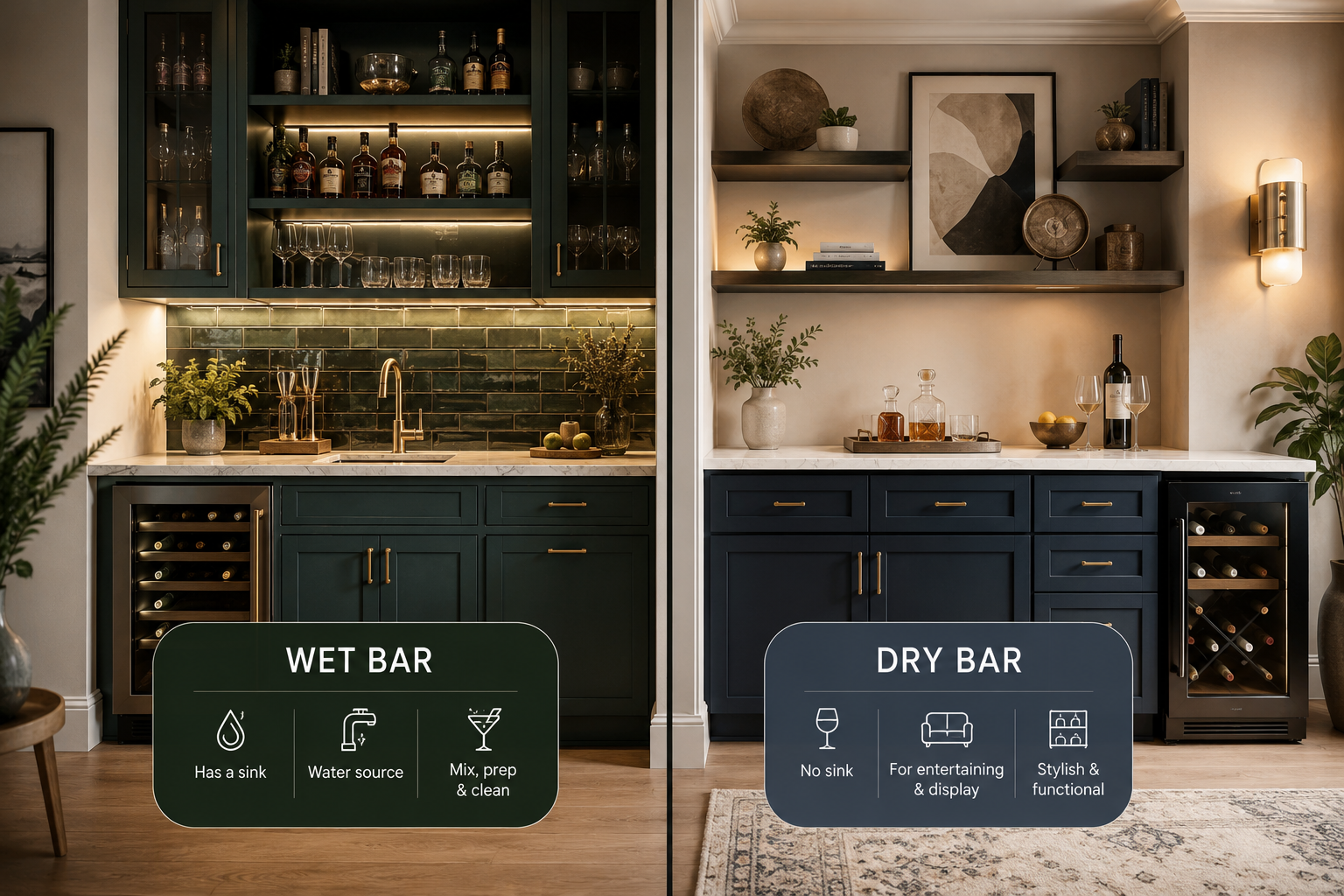
Wet bar vs dry bar comes down to one thing: plumbing. A wet bar has a sink with running water, which usually means it also has a dedicated waterline, a drain, and sometimes a small dishwasher or ice maker. A dry bar has no sink and no plumbing. It is a countertop and cabinetry setup for storing bottles, glassware, and small appliances like a beverage fridge or espresso machine. A wet bar costs more to install because of the plumbing work, but it makes hosting easier since you never have to leave the space to rinse a glass or refill a pitcher. A dry bar costs less, installs almost anywhere in the house, and works beautifully in living rooms, basements, and home offices where running plumbing would be difficult or expensive.
What Is a Wet Bar vs Dry Bar? The Simple Definition
A wet bar is a permanent home bar with a working sink, faucet, and drain. Water comes in, wastewater goes out. Because of that, wet bars need to sit near existing plumbing lines or have new lines run to them. Most include a bar sink, a beverage fridge, some form of overhead or under-counter storage, and often a dishwasher drawer or ice maker.
A dry bar is a home bar with everything except the plumbing. Cabinets, counter, seating, storage, refrigeration, and lighting all work the same. What you lose is the sink. What you gain is flexibility, since you can install a dry bar in any room in the house.
If you want the shortest possible answer to what is a wet bar vs dry bar: the wet one has a sink, the dry one does not. Everything else in the comparison flows from that single feature.
Wet Bar vs Dry Bar in Basement Setups
Basements are the most common spot people build home bars, and this is where the wet bar vs dry bar in basement decision gets interesting.
A wet bar makes sense in the basement if:
You already have plumbing roughed in from a basement bathroom or laundry
You entertain often and hate running upstairs mid-party
You have room for the full bar footprint, usually 6 to 10 linear feet of cabinetry
A dry bar makes more sense in the basement if:
Running plumbing would require breaking concrete or long horizontal runs
Your budget is tight and you would rather spend on finishes and appliances
The bar is more display and storage than heavy cocktail-mixing
For dry bar vs wet bar in basement decisions specifically, the deciding factor is usually plumbing accessibility. If your basement already has a floor drain or nearby waste line, the wet bar cost gap shrinks. If it does not, dry bar wins on almost every metric.
Cost Breakdown: Wet vs Dry Bar
Cost is where the two really separate. Here is what typically drives each budget for Middle Tennessee homes.
Dry bar costs include:
Cabinetry (base cabinets, uppers, or floor-to-ceiling tower)
Countertop
Beverage or wine fridge if included
Backsplash and lighting
Hardware
Wet bar adds all of the above plus:
Plumbing rough-in (supply and drain lines)
Bar sink and faucet
Electrical for dishwasher or ice maker if included
Sometimes a permit and inspection
In general, a dry bar runs a fraction of a wet bar's total budget for the same size cabinetry. The plumbing rough-in alone can double the project cost when new lines are needed. If you already have plumbing in the wall, that gap narrows significantly.
For a fuller picture of what drives cabinet pricing either way, our custom kitchen cabinets cost guide covers the material and labor variables that shape a build.
Cabinet Layouts That Work for Both
The cabinetry is the visual heart of both bar types, and the layout logic is nearly identical.
Base cabinets hold your fridge, hidden storage, and heavier bottles. Standard 24-inch depth works. For a wet bar, one base cabinet houses the sink with plumbing behind. For a dry bar, that same cabinet becomes bonus storage.
Upper cabinets are where glassware lives. Glass-front doors let you show off collections. Solid doors keep dust and clutter hidden. Our breakdown on kitchen cabinet door styles covers the tradeoffs, and shaker doors remain the most versatile choice for both bar types. Our full guide on shaker kitchen cabinets explains why.
Open shelving works especially well in dry bars, since you can lean into a display-forward look with backlit glass or wood shelving instead of full uppers.
A tall tower cabinet at one end gives you full-height storage for tall bottles, mixers, and glassware. For a wet bar this often houses a wine fridge or ice maker. For a dry bar it becomes a floor-to-ceiling display.
Countertop and Backsplash: The Design Layer
Both bar types deserve a countertop that handles spills and looks good under low light. Quartz is the most popular pick because it resists staining from wine and citrus without sealing. Granite works too, though it needs periodic maintenance. Butcher block adds warmth but reacts to water more than either stone. Our full comparison on quartz vs granite countertops walks through the tradeoffs.
The backsplash is where personality shows up. A dry bar can go dramatic with a slab backsplash or a bold geometric tile since it does not have a sink breaking up the wall. Wet bars can too, but you will need waterproof grout behind the sink. Our kitchen backsplash ideas piece has direction that translates to bars just as well.
Lighting: The Detail That Sets a Home Bar Apart
Lighting is the difference between a bar that feels like storage and one that feels like a destination. Under-cabinet LEDs across the upper cabinets. A pendant or two overhead. Backlit shelving if you have glass shelves. Dimmable everywhere.
Our under-cabinet lighting guide covers what to install, and the LED under cabinet lights for kitchen breakdown applies directly to bar setups.
Which Adds More Resale Value?
Both bar types signal "this home is set up for entertaining," which is what buyers respond to. Wet bars generally read as a higher-end feature because of the built-in plumbing and full functionality. Dry bars still add value, especially when the finishes are strong and the location makes sense.
If resale is a priority, a wet bar in the basement or near an entertaining space tends to earn more in appraisal impact. A dry bar in a dead corner earns less. Placement matters as much as which type you build. Our piece on kitchen remodel ROI covers how remodels translate into resale value.
When to Choose a Wet Bar
Pick a wet bar if:
You entertain more than once a month
You love mixing cocktails and want to rinse tools without leaving the space
Your basement or bar location already has plumbing nearby
You are building a proper home bar as a room feature
You want the resale premium
The sink alone changes how the space functions. If hosting is a real part of how you use your home, the wet bar pays back daily.
When to Choose a Dry Bar
Pick a dry bar if:
Plumbing would be a major cost or renovation project
You entertain casually or lean toward wine and pre-batched drinks
The space is a living room, home office, or spot without water access
You want a beautiful display feature with less overall investment
You may want to change or move the setup later
A dry bar with a great beverage fridge, quality glassware, and thoughtful lighting can feel just as elevated as a wet bar without the plumbing complexity.
Color and Finish Direction for 2026
Home bars follow the same finish trends as kitchens, just at smaller scale. Navy blues, forest greens, and warm woods are dominating. Matte black hardware pairs with almost everything. Brass has held its ground for years and shows no sign of slowing down. Our kitchen cabinet color trends 2026 piece pulls the direction that carries over to bars.
For hardware specifically, our kitchen cabinet hardware guide covers the finishes that hold up on high-touch cabinet doors, which is exactly what a home bar sees on party nights.
Bringing Your Wet Bar or Dry Bar to Life in Middle Tennessee
Whether you are leaning toward a wet bar with a full plumbing rough-in or a dry bar built for display and storage, the cabinetry is what makes the space feel like part of your home instead of a bolted-on feature. Custom cabinets sized to your wall, finished to match your kitchen, and detailed with the right hardware turn a home bar into something you actually want to show off.
We build custom cabinetry for homeowners across the region, including Nashville kitchen remodeling, Franklin kitchen remodeling, Brentwood kitchen remodeling, Spring Hill kitchen remodeling, Murfreesboro kitchen remodeling, Thompson's Station kitchen remodeling, and Columbia kitchen remodeling.
Reach out when you are ready and we will walk the space, sketch a layout, and build a home bar that earns its spot every time you host.