Kitchen Cabinet Hardware: The Complete Guide to Pulls, Knobs, and Finishes
Kitchen cabinet hardware refers to the pulls, knobs, handles and hinges attached to your cabinet doors and drawers. It's the jewelry of your kitchen, quietly shaping how the whole room feels while doing real daily work. The right pieces can update tired cabinets in an afternoon, and the wrong ones can make a brand-new kitchen look slightly off. This guide walks through styles, finishes, placement, and installation so you can choose pieces that actually fit your home. At SH Design Woodcraft, we've helped hundreds of Middle Tennessee homeowners get this decision right the first time.
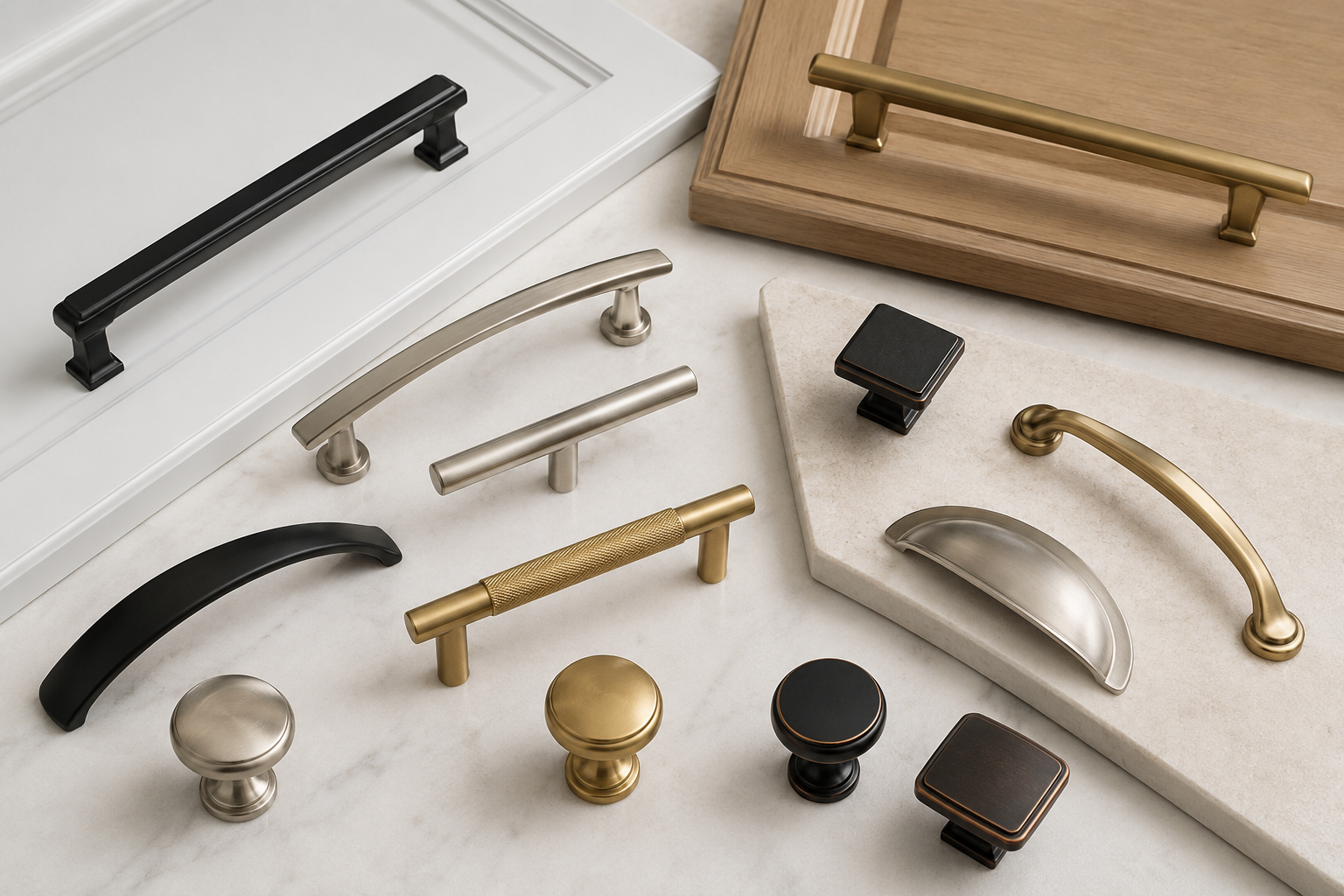
Why Kitchen Cabinet Hardware Matters More Than You Think
Most people underestimate what hardware does. It's the one part of your cabinets you touch every single day, sometimes hundreds of times. Beyond function, hardware sets the visual tone of the whole room. Sleek bar pulls whisper "modern." Cup pulls and porcelain knobs say "farmhouse." Warm unlacquered brass says "considered and timeless." Even the best custom cabinetry can fall flat if the hardware doesn't fit the story you're telling with the rest of the space.
Modern and Contemporary Kitchen Cabinet Hardware
Modern kitchen cabinet hardware leans clean, linear, and understated. Think long bar pulls in matte finishes, edge pulls that almost disappear into the door, or finger pulls milled straight into the panel. Contemporary kitchen cabinet hardware blurs the lines a bit, borrowing warmth from traditional shapes while keeping silhouettes minimal.
If your cabinets are flat-panel or slab, either family works beautifully. For shaker doors, contemporary hardware with softer edges usually feels more natural than strict modern shapes. A good rule: match the geometry of the hardware to the geometry of the door.
Popular Kitchen Cabinet Hardware Finishes
The finish you pick will do more heavy lifting than the shape.
Black Kitchen Cabinet Hardware
Matte black kitchen cabinet hardware became a default choice around 2020, and it isn't slowing down. It works with almost every cabinet color, hides fingerprints reasonably well, and gives kitchens a grounded, editorial look. Black kitchen cabinet hardware pairs especially well with white and light-wood cabinets, which is why we see it so often in our Franklin and Brentwood kitchen projects.
Brass and Gold Kitchen Cabinet Hardware
Brass kitchen cabinet hardware has moved from trendy to established. Unlacquered brass ages beautifully, developing a soft patina over time. Gold kitchen cabinet hardware in a satin or champagne tone flatters cream, sage green, navy, and deep blue cabinets. Living brass isn't for perfectionists, but the character it develops is worth the wait.
Bronze and Brushed Nickel
Oil-rubbed bronze kitchen cabinet hardware still has loyal fans, especially in traditional and craftsman homes. Brushed nickel kitchen cabinet hardware is the safe, quiet choice that dates the least and blends easily with stainless appliances. Both are strong picks if you want your hardware to fade into the background rather than shout.
Hardware for White Kitchen Cabinets
White cabinets are the most requested finish across our Middle Tennessee builds, and the hardware choice makes or breaks the look. White kitchen cabinets with black hardware feel crisp and current, particularly in farmhouse or transitional kitchens. White kitchen cabinets with gold hardware skew warmer and dressier, which works well with warm-toned floors or brass lighting.
If you want quiet and classic, brushed nickel or polished chrome keeps everything soft and neutral. When in doubt, order two or three samples and hold them against your actual door in daylight before deciding.
Kitchen Cabinet Hardware Pulls vs Knobs
The old rule was knobs on doors, pulls on drawers. That's still a fine starting point, but modern kitchens often use pulls everywhere for a cleaner, more unified look. A mix also works: cup pulls on lower drawers, small knobs on uppers, and a longer appliance pull on the pantry.
Mixing knobs and pulls on kitchen cabinets is a real trend, and it stays elegant as long as your finishes are consistent. For sizing, use 3-inch pulls on doors and small drawers, 5 to 6-inch pulls on standard drawers, and 10 to 12-inch pulls on wide drawers or the fridge panel.
Kitchen Cabinet Hardware Placement Guide
Placement is where most DIY jobs go sideways. Here's the system we use:
Upper cabinet doors: knob or pull mounted 2.5 to 3 inches from the bottom corner, on the stile side opposite the hinge.
Lower cabinet doors: same offset, but measured from the top corner.
Drawers under 24 inches: single pull centered horizontally and vertically.
Drawers over 24 inches: two pulls, each aligned with the door pulls above where possible.
Consistency across the whole kitchen matters more than any single rule. Pick a system and repeat it everywhere. Kitchen cabinet hardware placement in modern kitchens often uses longer pulls positioned vertically on doors and horizontally on drawers, creating a subtle grid.
Farmhouse and Rustic Kitchen Cabinet Hardware
Farmhouse kitchen cabinet hardware means cup pulls, bin pulls, and simple round knobs, usually in matte black, oil-rubbed bronze, or aged brass. Rustic kitchen cabinet hardware pulls often feature hand-forged iron, hammered surfaces, or wrought textures. Both styles reward restraint. Pick two shapes maximum, say a cup pull and a matching knob, and repeat them across the whole kitchen. Too many shapes read as cluttered fast.
How to Install Kitchen Cabinet Hardware
Installation is straightforward with the right jig.
Buy or borrow a cabinet hardware jig. It's the difference between a smooth afternoon and a weekend of regret.
Mark one door and one drawer as your reference, and check the height by eye before drilling anything permanent.
Drill through-holes with a sharp bit, using painter's tape over the drill site to prevent chip-out.
Use machine screws sized for your door thickness. Standard is 1 inch, but thicker doors and backplates need longer screws.
Snug the hardware down, but don't overtighten and strip the wood.
If your cabinets are painted, tape the whole area around the hole. Small chips near a fresh drill site are almost impossible to touch up cleanly later.
Kitchen Cabinet Hardware Trends 2026
A few things we're watching in Middle Tennessee kitchens right now:
Unlacquered brass continues to grow, especially in Nashville renovations of older homes where the aged patina feels historically correct.
Mixed metals are officially normal. A brass faucet with black hardware no longer raises eyebrows.
Longer pulls on drawers, sometimes edge-to-edge, are showing up in higher-end builds.
Backplates are back, giving hardware more visual weight in traditional and English-cottage kitchens.
Warm silvers like champagne bronze and satin nickel are quietly replacing chrome in transitional homes.
How to Choose Kitchen Cabinet Hardware for Your Middle Tennessee Home
Start with your cabinet color and door style, then work outward. Match the finish to your faucet or your lighting, not both at the same intensity. Order samples before you commit to 40 pieces, because hardware looks different on your actual door than in a showroom or online.
If you're planning a Kitchen remodeling Nashville, TN,Franklin, Brentwood, Spring Hillor Murfreesboro, we can bring samples out and help you make the call in person. Getting kitchen cabinet hardware right the first time is a small decision that keeps your kitchen looking finished, considered, and current for years.