Slim Shaker Cabinets: What They Are and How to Choose the Right Style
Slim shaker cabinets trade the thick, traditional shaker frame for a narrower rail, usually somewhere between half an inch and an inch wide, instead of the standard two to three inches. The result is a cleaner, more contemporary take on a door style that has been a kitchen staple for decades. If you've been comparing cabinet options and keep running into "slim shaker" without a clear answer for what actually separates it from a regular shaker door, this guide covers the construction, the finish options, the hardware that suits it best, and what to expect if you're weighing RTA (ready-to-assemble) cabinets against a custom-built option.
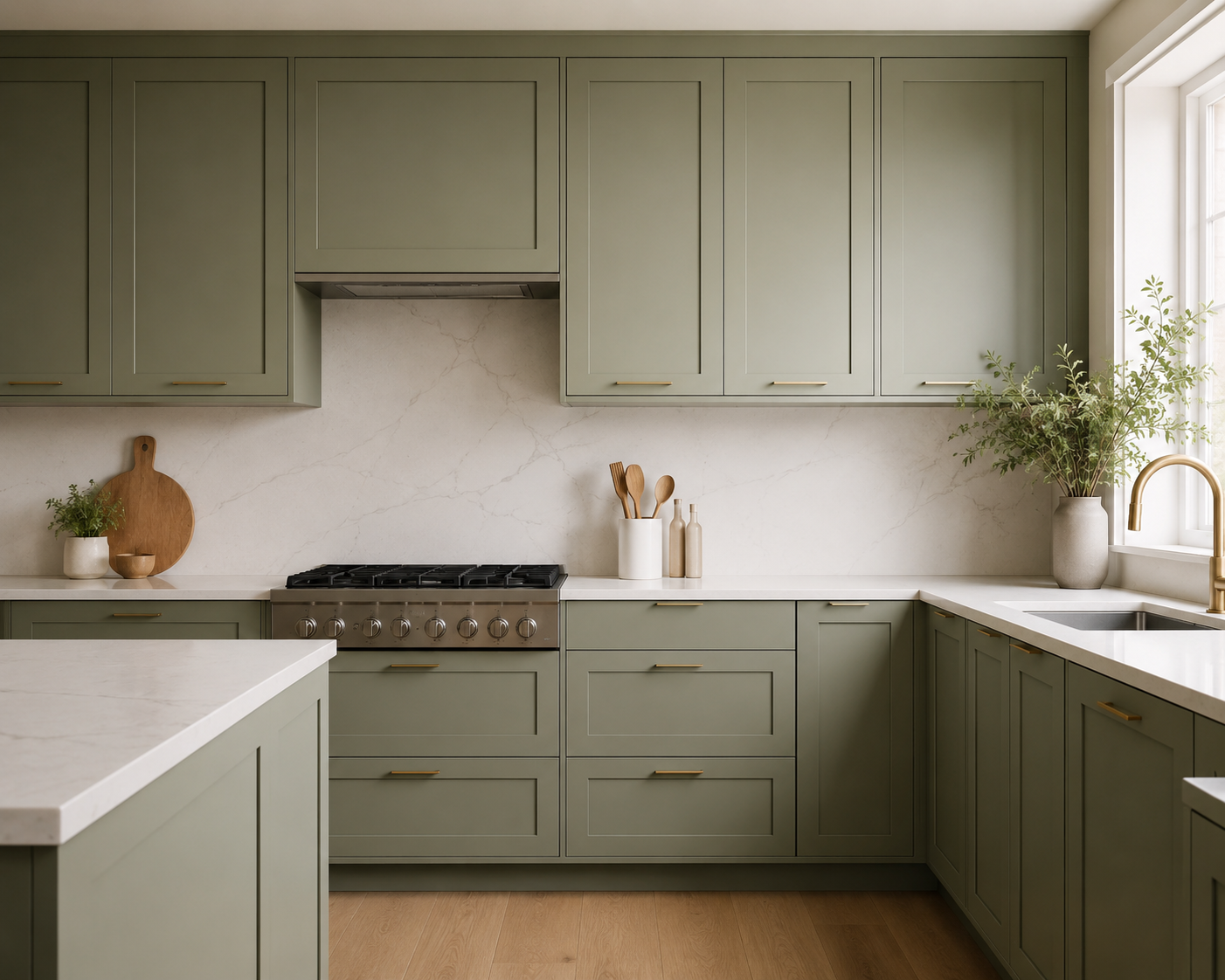
What Is a Slim Shaker Cabinet?
Standard shaker doors use a five-piece frame, with rails and stiles that run two to three inches wide around a flat, recessed center panel. Slim shaker cabinets keep that same five-piece structure but shrink the frame down to roughly half an inch to an inch. Same recessed panel, same square edges, just a thinner border.
That small change adds up visually. Less frame means more of the door reads as flat panel, which gives the cabinet face a quieter, more contemporary look without abandoning the shaker profile entirely. It sits in the middle ground between a full slab door with no frame at all and a traditional shaker door with a heavier, more visible border. In a smaller kitchen, that thinner rail can make a wall of cabinets feel less busy, since there's less shadow line breaking up each door.
Some manufacturers market the same style as "petit shaker" or "skinny shaker," but slim shaker is the term that's stuck across most cabinet lines and RTA catalogs.
Slim Shaker Cabinet Doors: Construction and Style
Slim shaker cabinet doors are built the same way standard shaker doors are, just with narrower stock for the rails and stiles. Most use five-piece construction: two vertical stiles, two horizontal rails, and a flat center panel set into a groove, not glued flush. That construction matters more than people think. A true five-piece door can be refinished or repaired without replacing the whole panel, while cheaper slab-style imitations usually can't.
A few construction variations are worth knowing before you order:
Full overlay slim shaker cabinets cover almost the entire cabinet box, leaving only a thin reveal between doors, which suits the slim frame well since it keeps the sightlines clean.
Inset slim shaker cabinets sit flush within the face frame instead of on top of it. This is a more traditional, higher-end build, and it's less forgiving of humidity swings in Tennessee's climate, so it needs tighter tolerances during install.
Frameless slim shaker cabinets skip the face frame entirely, a European-style box construction that gives you slightly more usable interior width per cabinet, a worthwhile trade-off if storage space is tight.
"Slim shaker" describes the door profile, not the box construction. Ask which of these three you're actually being quoted, since the two decisions get made separately.
Popular Finishes: White Oak, Walnut, and White Slim Shaker Cabinets
Finish is where slim shaker cabinets really separate themselves, and a few options keep coming up in the kitchens we build across Middle Tennessee.
White slim shaker cabinets are still the most requested option. The thinner frame keeps a white kitchen from feeling flat, since the reduced shadow lines let the wood grain, countertop, and hardware do more of the visual work.
White oak slim shaker cabinets have been the biggest style shift we've seen over the past two years. A natural or lightly stained white oak finish, paired with the narrower rail, gives a kitchen a warm, understated look that reads as current without chasing a trend that dates in five years.
Walnut slim shaker cabinets go the opposite direction: darker and richer, usually reserved for an island or a lower-cabinet run paired with lighter uppers. It's a striking combination, but walnut shows water spots and fingerprints more readily than oak, so it's worth discussing maintenance before committing a full kitchen to it.
Black slim shaker cabinets and green slim shaker cabinets (sage and deep forest tones both come up often in consultations) work well specifically because of the slim profile. A heavier, traditional shaker frame in a bold color can feel visually heavy in a smaller kitchen. The narrower rail lightens that up.
Whatever finish catches your eye, ask to see it on an actual door sample in your kitchen's own lighting before ordering. Photos and showroom lighting both distort how a stain or paint color reads at home.
RTA Slim Shaker Cabinets: What to Know Before You Buy
RTA (ready-to-assemble) slim shaker cabinets show up constantly in searches, and it's easy to see why. Wholesale RTA base cabinets in a slim shaker profile ship flat, cost less upfront, and let a homeowner or contractor assemble on-site. If you're pricing out a rental flip or a straightforward budget remodel, RTA is a legitimate option worth comparing.
A few things are worth knowing before you order a container of them. Most RTA slim shaker cabinets use plywood or MDF boxes with a laminate or thermofoil door rather than solid wood, which keeps the price down but also means the finish generally can't be touched up or refinished the way a painted or stained solid wood door can. Hinges and drawer slides on lower-cost RTA lines usually sit a step below what you'd get from a local cabinet maker, and that's the part that tends to show wear first, not the door itself. You'll also see unfinished slim shaker cabinets sold RTA, meant for a buyer who wants to prime, paint, or stain the boxes themselves after delivery.
Big-box retailers and online RTA wholesalers, including Home Depot's Home Decorators line and various cabinets-to-go style outlets, sell a version of this style, and for a straightforward, budget-conscious remodel, that's a reasonable place to start. IKEA also carries a version, though its sizing runs on a metric grid that doesn't always match standard American cabinet openings, worth checking if you're mixing IKEA boxes into an existing layout.
Where custom-built slim shaker cabinets earn the price difference is fit and longevity: boxes built to your exact wall dimensions instead of stock sizes patched with filler panels, solid wood doors that can be refinished in fifteen years instead of replaced, and hardware rated for daily use rather than a showroom demo. If you're gutting the kitchen once and staying long-term, that difference compounds. If you're flipping a property or working a tight timeline, RTA might be the smarter call.
Slim Shaker vs. Standard Shaker Cabinets
The difference comes down to one measurement: the width of the rail and stile framing the door.
Standard shaker cabinets use a two-to-three-inch frame. It's the look most people picture when they hear "shaker," a fairly substantial visible border around a recessed panel.
Slim shaker cabinets narrow that same frame to roughly half an inch to an inch. The recessed panel is still there. The five-piece construction is still the same. The only real change is proportion: more panel showing, less frame.
Which one looks better depends on the kitchen. In a large kitchen with tall upper cabinets, a standard shaker frame reads as substantial and traditional. In a smaller kitchen or one with lower ceilings, the slim profile tends to look less boxy and lets the cabinet color or wood grain read as the dominant visual instead of the frame itself.
Neither is objectively more durable. Frame width is a style decision, not a construction-quality one, so choose based on the look you actually want in the room.
Hardware for Slim Shaker Cabinets
Hardware matters more on a slim shaker door than it does on a standard one, simply because there's less frame to visually anchor a pull or knob.
For placement, the standard rule still applies: mount door pulls vertically about two and a half inches from the top corner (or the bottom corner, on lower cabinets), and center drawer pulls horizontally, using two pulls spaced evenly on anything wider than 24 inches. Because the slim frame leaves less margin at the edge, double-check that your hardware's screw holes won't land too close to the panel groove before you drill.
On style, a few pairings come up often in the kitchens we build:
Matte black or oil-rubbed bronze pulls read as clean and a little industrial, and hold up especially well against white or white oak slim shaker cabinets, since the contrast does the visual work the frame used to do.
Brushed brass or unlacquered brass warms up a walnut or deep green kitchen without competing with the wood tone.
Finger pulls, a routed channel instead of a physical knob or pull, are popular on slim shaker cabinets because the minimal frame already leans modern, and skipping hardware entirely pushes that further.
Whatever you land on, buy one sample pull before ordering a full set. Photos never show true scale, and a pull that looks right online can look oversized against an actual one-inch frame.
Bringing Slim Shaker Cabinets Into Your Kitchen
Slim shaker cabinets work with nearly any kitchen style, modern farmhouse, transitional, or straight contemporary, because the profile is subtle enough not to compete with other design choices in the room. They make the most sense in kitchens with a lot of cabinet doors visible at once (a full wall of uppers, a large island, a butler's pantry), where a heavier standard shaker frame can start to feel repetitive.
If you're weighing RTA against custom, it mostly comes down to timeline. A short-term flip usually doesn't justify custom cabinetry. A kitchen you plan to live in for the next decade or two generally earns that investment back in fit, durability, and resale.
And if new cabinet doors are just one piece of a larger project, it's worth stepping back before ordering anything. Our kitchen remodel design guide walks through layout, budget sequencing, and the decisions that are hard to undo once demolition starts, and our kitchen cabinet remodel ideas guide covers colors and wood tones beyond just the door profile if you're still narrowing down a direction.
SH Design Woodcraft builds custom slim shaker cabinetry for kitchens across Nashville, Franklin, Brentwood, Spring Hill, Murfreesboro, Thompson's Station, and Columbia. If you're ready to see the profile in person, against real wood samples and in your own kitchen's lighting, contact our team to schedule an in-home consultation.