Kitchen Flooring in 2026: Best Materials, Ideas, and Options for Every Home
Kitchen flooring takes more abuse than any other floor in the house. Coffee spills before anyone's had coffee. A cast iron pan slipping out of somebody's hand at 6 a.m. Kids running in from the yard with wet socks. Whatever goes down has to handle all of that and still look decent five years later. Some materials hold up beautifully under this kind of daily punishment, and others start showing their age by year three. This guide walks through the flooring options homeowners are actually choosing in 2026, the trade-offs that don't get talked about enough, and the small details that end up mattering more than most people expect.
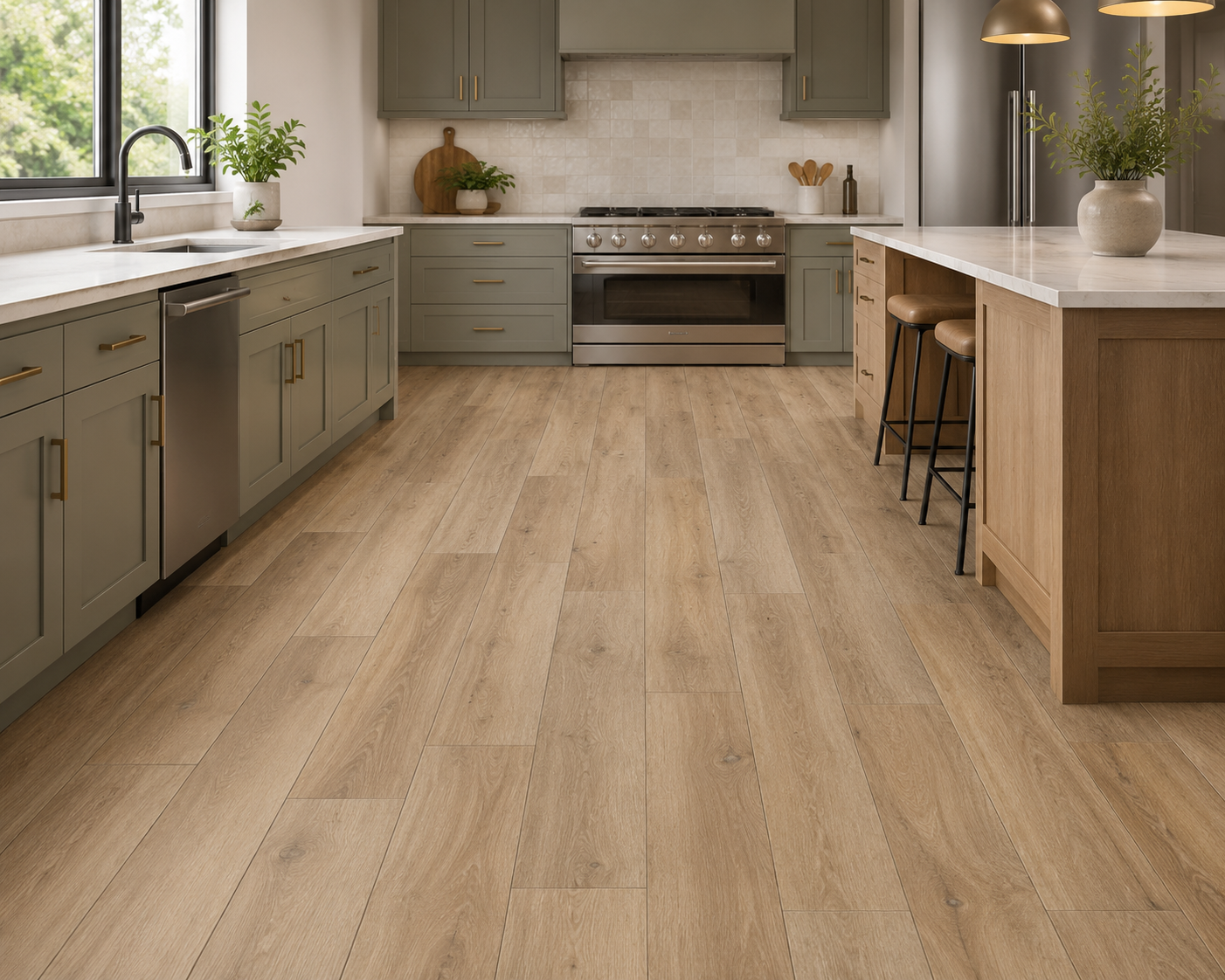
Best Flooring for Kitchen: Start With How You Actually Live
Before falling for a floor sample under warm showroom lighting, be honest about your kitchen. Do you cook every night or mostly heat up takeout? Is there a big dog who shakes water off after drinking? Anyone in the house wearing heels on a floor you're supposed to baby?
These questions matter more than most homeowners realize. Beautiful white oak floors look stunning right up until a dropped wine glass leaves a divot in year one. Meanwhile, porcelain tile has been known to last twenty years in a house with four kids and two golden retrievers, still looking almost new.
Water resistance is the first thing to weigh. Kitchens leak. Dishwashers leak. Ice makers leak. The right floor shrugs it off. Comfort is second. If you cook a lot, a hard tile floor will wear on your knees and back over time. And then there's the budget question, because installation can cost as much as the material itself once you factor in subfloor prep and old floor removal. For anyone still working out the numbers, our kitchen remodel design guide breaks down where the money tends to go.
Kitchen Flooring Options Homeowners Are Actually Choosing
Around Middle Tennessee, six materials come up in almost every kitchen conversation. Here's an honest read on each.
Porcelain tile is one of the toughest options on the market. It's waterproof, dense, and the wood-look versions today are genuinely convincing. Downsides? It's cold in winter unless there's heat running underneath, and it can be brutal on dropped dishes.
Luxury vinyl plank has quietly become the top request in kitchen remodels. It's warmer underfoot than tile, fully waterproof, and forgiving when a jar of pasta sauce hits the floor. The catch is that not all LVP is created equal. Cheap versions dent when a fridge slides across them.
Hardwood is beautiful and adds resale value, but it needs an owner who won't panic over the first scratch. In a busy kitchen, character will build up over time. Some people love that patina, others regret it.
Laminate looks like wood, costs less, and installs quickly. But standing water is its kryptonite. One overflowing sink and the seams can swell.
Natural stone like slate or travertine has real personality, but it needs sealing every year or two. That maintenance turns off a lot of homeowners.
Engineered hardwood is the middle ground. Real wood on top, stable core underneath. It handles the humidity swings common in Tennessee better than solid hardwood does.
Pairing any of these with the right kitchen countertop ideas is where a design really starts to click.
Kitchen Floor Tiles That Look Right and Wear Well
Tile has been in kitchens forever for a reason. Porcelain is denser than ceramic, which means fewer chips when something heavy lands on it. Ceramic still works fine in a lower-traffic kitchen and costs less, so it's often the right pick when the budget is tight and the kitchen isn't a warzone.
Big-format tiles, the 12x24 and 24x24 sizes, have taken over most new kitchens. Fewer grout lines mean less scrubbing and a cleaner look. Small mosaic tiles are still charming in the right cottage or vintage kitchen, but grout maintenance is real. Anyone who hates cleaning grout should stay away from a floor that's mostly made of it.
Wood-look porcelain has come a long way. Ten years ago, spotting the fake from across the room was easy. Now, unless someone's on their hands and knees inspecting it, most guests never realize. Marble-look porcelain gives you the Carrara aesthetic without the etching problems real marble has with lemon juice and wine.
One small detail that gets overlooked: ask for a matte or textured finish, not a high-gloss polish. Polished tile in a kitchen gets slippery the second something wet lands on it.
Vinyl Kitchen Flooring: Why It Keeps Winning Bids
Vinyl used to have a bad reputation, and for good reason. The peeling yellow sheet vinyl of the '80s colored a whole generation's opinion. Today's product is nothing like that.
Modern luxury vinyl plank clicks together like laminate, sits over most existing floors without a tear-out, and takes water like a champ. Kids' juice boxes, pet accidents, a dishwasher that decides to send water across the room, none of it damages a quality LVP floor.
The comfort factor is underrated. Cooking for two hours on tile will wear anybody out. LVP has some give to it, and it feels warmer to the touch when you get out of bed on a January morning. For families with mobility considerations, or anyone who's just tired of a hard floor, it's a genuine quality-of-life upgrade.
The thing to watch for is thickness. Anything under 5mm feels cheap and dents easily. Look at wear layer too. Aim for 20 mil or higher in a busy kitchen. And if you're weighing the bigger financial picture, our post on how much a kitchen remodel costs puts flooring in context with everything else.
Waterproof Flooring for Kitchen Life
Kitchens flood. Not always dramatically. Sometimes it's a slow leak behind the fridge that nobody notices for six months. Either way, the floor is the first thing to suffer.
Luxury vinyl plank leads here because the whole plank is waterproof, top to bottom. Water can sit on it for hours and nothing changes. Porcelain tile is close behind, though the grout needs sealing to keep water from working underneath.
Sheet vinyl deserves a mention too. It's not fashionable, but a seamless sheet is one of the best defenses against water intrusion, which is why it still shows up in rental properties and older homes. Sealed concrete has picked up momentum in modern designs, especially in open floor plans where the concrete flows out to a covered patio.
The one material to be cautious about in wet-heavy kitchens is unsealed hardwood. It can work, but only for someone willing to jump on spills immediately, every single time.
Kitchen Flooring Ideas That Don't Look Like Everyone Else's
Standing out doesn't require reinventing the wheel. A few things that consistently work in Tennessee homes:
Herringbone or chevron patterns in wood-look plank add movement without going wild. Wide planks in a small kitchen make the room feel bigger, not smaller, which surprises most homeowners. A classic black and white checker still looks fantastic in a farmhouse kitchen when it's committed to fully.
Mixing floors between the kitchen and adjoining rooms used to be considered a design mistake. Now it's often the right call. A tile kitchen flowing into a hardwood dining room can look intentional if the transition is clean and the tones talk to each other.
Coordinating the floor with cabinets and the backsplash is where a kitchen goes from nice to memorable. Take a look at kitchen cabinet remodel ideas and kitchen backsplash ideas when pulling the palette together.
Durable Kitchen Flooring That Outlasts the Trends
For homeowners who want a floor they'll never think about again, porcelain tile and natural stone can last fifty years plus with basic care. Solid hardwood is close behind because it can be refinished. A hardwood floor that looks tired at year twenty can be sanded down and stained fresh, and it looks brand new again.
LVP typically holds up 15 to 25 years. Laminate is more like 10 to 20, and only if water stays off of it. But durability is only half the equation. A hardwood floor in a kitchen where the sink leaks twice a year isn't going to last, no matter what the warranty says.
The small habits matter more than the material sometimes. A good entry mat catches grit before it scratches the finish. Wiping up spills the day they happen keeps grout from staining. Felt pads under bar stools save floors from swirl marks nobody notices until it's too late.
Picking the Floor That Fits Your Life
There's no single best kitchen floor. There's a best one for your budget, your family, your cooking habits, and how much maintenance feels reasonable. Get physical samples, put them on your actual kitchen floor next to your cabinets, and look at them in morning light and evening light. Walk on them barefoot. Drop something on them if the showroom allows it.
At SH Design Woodcraft, we've been helping families around Middle Tennessee sort through these decisions for years. Our team builds custom cabinets, but just as much time gets spent talking about floors, countertops, and layouts because the whole kitchen has to work as one piece. Homeowners in Nashville, Franklin, Brentwood, Spring Hill, Murfreesboro, Thompson's Station, and Columbia are welcome to reach out. Come by the shop, bring your questions, and we'll walk through what makes sense for your kitchen. No pressure, no upsell, just honest advice from people who do this every day.