Sink for Kitchen 2026: Sizes, Materials, and How to Pick the Right One
Sink for kitchen shopping sounds simple until the choices start piling up. Single bowl or double? Undermount or drop-in? Stainless steel, fireclay, granite composite, or copper? The right kitchen sink handles daily dishwashing, pot-scrubbing, and prep work without denting, staining, or getting scratched to pieces within a year. The wrong one becomes a source of constant frustration, whether it's too shallow for tall stockpots, too small for a sheet pan, or made from a material that never quite looks clean. This guide walks through the sizes, materials, and styles worth knowing before making a purchase that will get used dozens of times a day for the next fifteen years.
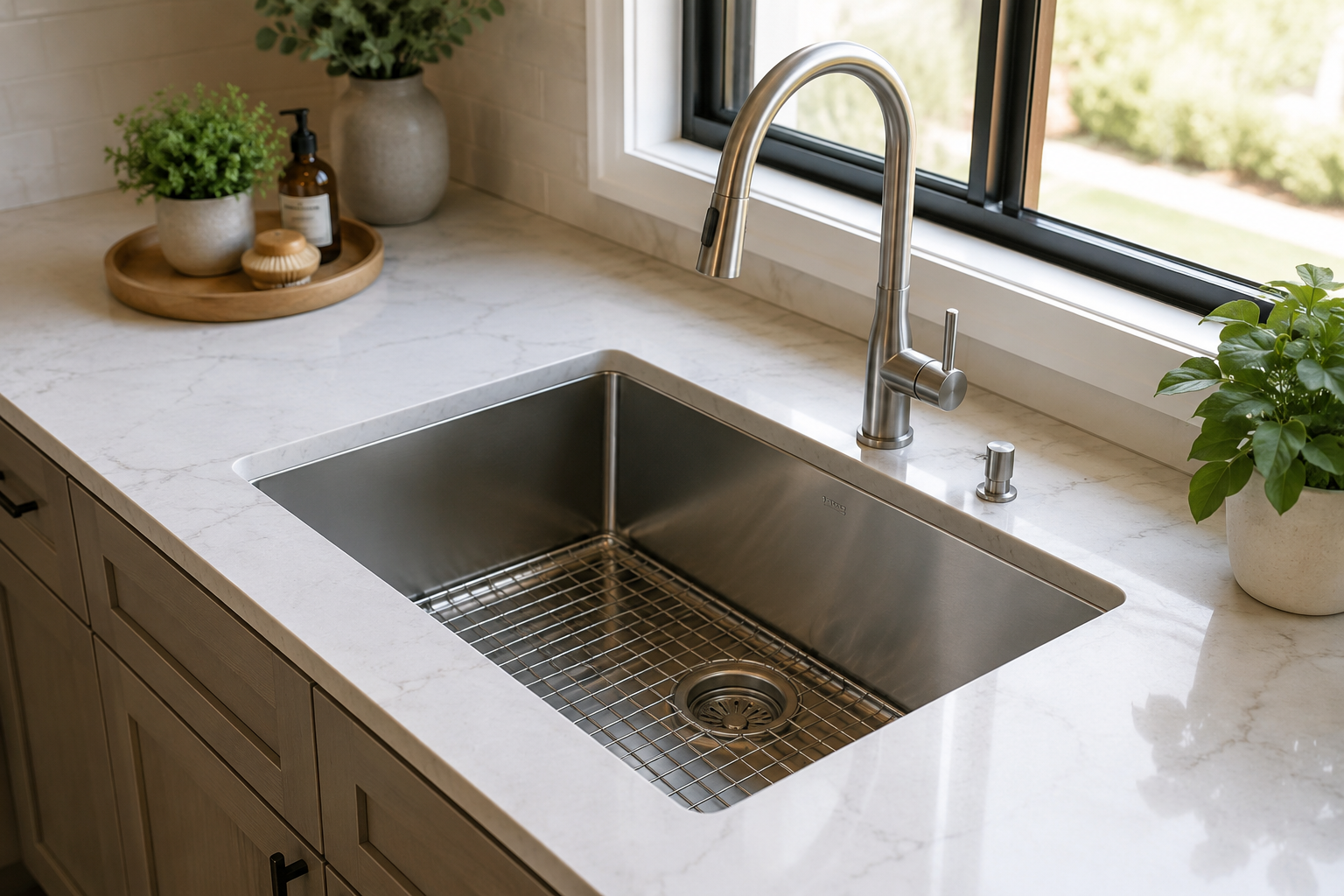
Sink for Kitchen: What to Think About First
Before shopping by looks, think about how the kitchen actually gets used. Someone who cooks big Sunday dinners with multiple pots needs a different sink than someone who mostly reheats leftovers and loads a dishwasher. Anyone who bakes a lot needs enough width to fit a full-size sheet pan flat inside the basin.
Base cabinet size sets the outer limit. A sink can't be wider than the cabinet holding it. A 30-inch cabinet typically fits a sink up to about 28 inches wide. A 33-inch cabinet works with sinks up to 30 or 31 inches. A 36-inch cabinet opens up options for 33 to 34 inch sinks. Measuring the existing cabinet first saves a lot of returned merchandise.
Depth is the second big variable. Shallow sinks around 7 inches deep are easier on the back but splash more. Deep sinks in the 9 to 10 inch range hide dirty dishes and contain water better but require reaching further down. Most homeowners land somewhere between 8 and 9 inches, which balances comfort with functionality. For anyone tackling a bigger project, the kitchen remodel design guide covers how the sink fits with counters, cabinets, and layout choices.
Kitchen Sink Sizes and Standard Dimensions
Standard kitchen sink sizes follow a fairly predictable range, though custom options exist for anyone willing to pay for them.
Single bowl sinks typically run 22 to 33 inches wide and 8 to 10 inches deep. Sizes under 25 inches suit small kitchens, bar sinks, or secondary prep areas. Larger single bowls in the 30 to 33 inch range have become the top request for main kitchens because they easily fit oversized cookware.
Double bowl sinks average 33 inches wide, split into two basins that can be equal (50/50) or offset (60/40 or 70/30). The offset style leaves one large basin for pots and one smaller basin for rinsing or garbage disposal use.
Farmhouse or apron-front sinks usually measure 30 to 36 inches wide and 9 to 10 inches deep. They demand a specific cabinet designed to hold the exposed front panel.
Bar or prep sinks run 15 to 18 inches wide, perfect for islands or beverage stations. They handle rinsing produce, chilling wine bottles, or making cocktails without occupying the main sink.
Standard cabinet-to-sink ratios worth knowing: 30-inch cabinet fits up to 28-inch sink, 33-inch cabinet fits up to 30-inch sink, 36-inch cabinet fits up to 33-inch sink. If a bigger sink is the goal, the cabinet has to grow too. The kitchen sink cabinet breakdown covers those pairings in more detail.
Types of Kitchen Sinks Worth Considering
Beyond size, the mounting style and configuration change how the sink looks and works.
Undermount sinks attach below the countertop. Crumbs and spills wipe straight into the basin without catching on a raised rim. They pair best with solid-surface counters like quartz, granite, and marble.
Drop-in sinks sit on top of the counter with a visible rim. Installation is easier and cheaper, and they work with any countertop material, including laminate and butcher block.
Farmhouse and apron-front sinks feature an exposed front panel that extends past the cabinet face. They add serious visual character and typically hold more water thanks to their depth.
Workstation sinks come with integrated accessories: cutting boards, colanders, drying racks, and roll-up mats that slide along a built-in ledge. They turn the sink into a prep zone and save counter space.
Single vs double bowl is a classic debate. Single bowls handle big pots better. Double bowls make multitasking easier, like soaking dishes on one side while washing produce on the other. The trend has shifted heavily toward large single bowls in recent years, though double bowls still hold strong in traditional kitchens.
Integrated sinks are formed as one piece with the countertop, usually in solid surface materials like Corian. Seamless and modern, they cost more but deliver a truly clean look.
Best Kitchen Sink Material: The Honest Comparison
Material choice affects durability, maintenance, and appearance more than any other factor.
Stainless steel dominates the market for good reason. It's affordable, durable, and forgiving of dropped dishes. Look for 16 or 18 gauge steel. The lower the gauge number, the thicker the metal. A 16-gauge sink feels solid and dampens sound better, while 18-gauge is thinner and slightly noisier. Anything above 18 tends to feel flimsy.
Granite composite sinks made by brands like Blanco Silgranit combine crushed granite with acrylic resin. They resist scratches, chips, heat, and stains impressively well. Available in colors from white to black to concrete gray, they hide water spots better than stainless. The main downside is weight, which requires proper cabinet support.
Fireclay offers a classic farmhouse look with a smooth, glossy finish. It handles hot pans and heavy pots without chipping in most cases. Colors are usually limited to white, cream, or black. Fireclay sinks are heavy and need serious structural support underneath.
Cast iron with enamel coating delivers a similar classic look at a lower price than fireclay. The enamel can chip if a heavy pan hits the edge hard, exposing the iron underneath, which then rusts.
Copper develops a beautiful patina over time and has natural antimicrobial properties. It's soft, so it dents more easily, and the price runs high.
Quartz composite works similarly to granite composite but uses quartz particles. It resists staining well and comes in a broad color palette.
For a full picture of how sink materials pair with countertop choices, the types of kitchen countertops guide is worth a look.
Kitchen Sink Depth and Bowl Configuration
Depth matters more than most homeowners realize until they use a shallow sink for the first time and get water splashed all over the counter.
Shallow sinks (6 to 7 inches) work in low-traffic kitchens, wet bars, or for anyone with mobility concerns who doesn't want to bend far.
Standard depth (8 to 9 inches) hits the sweet spot for most families. Deep enough to soak a stockpot, shallow enough to reach without straining.
Deep sinks (10 inches or more) hide messy dishes and contain splashing well. They can feel awkward for shorter users and put more strain on the back during long dish sessions.
Bowl configuration is another daily-life decision. A large single bowl gives maximum flexibility for big cookware. A 60/40 double bowl offers a big washing side and a small rinsing side. A true equal double bowl (50/50) is best for households that separate soaking, washing, and rinsing tasks.
Some homeowners now install a large single bowl in the main kitchen and a small prep sink on the island, getting the best of both worlds. That setup pairs nicely with kitchen island ideas that include seating and prep space.
Best Sinks for Kitchen: Brand Recommendations
Brand matters, especially for materials like stainless steel and granite composite where quality varies widely.
Kohler offers a huge lineup across every material and price point. Their stainless steel sinks are solid, and the enamel-coated cast iron pieces have real staying power.
Kraus built a strong reputation for stainless steel sinks with heavy sound-dampening pads and rust-resistant coatings. Prices sit in the mid-range with premium construction.
Blanco dominates the granite composite category with the Silgranit line. Colors hold up well, and the material handles daily use beautifully.
Elkay is a long-standing American manufacturer known for durable stainless steel, especially in commercial-grade options that work well in busy home kitchens.
Ruvati and Ruvati Nesta have gained popularity for workstation sinks with clever accessories at reasonable prices.
Rohl and Native Trails occupy the high-end fireclay and copper space with pieces that function as much as furniture as they do fixtures.
Brands to think twice about include unknown imports without proper certifications, which often use thinner steel, weaker mounting brackets, and finishes that fail within a few years.
Kitchen Sink Installation Tips Worth Knowing
Sink installation isn't complicated, but a few details matter more than they seem.
Cabinet reinforcement is critical for heavy sinks like fireclay, cast iron, or thick granite composite. A standard sink base often needs additional bracing to safely hold the weight of a 90 to 120 pound sink filled with water and dishes.
Standard drain size is 3-1/2 inches for most kitchen sinks, matching the opening for garbage disposals. Double check drain placement before buying, especially with offset drain sinks that can offer more usable cabinet storage underneath.
Sound dampening pads on the underside of stainless steel sinks make a huge difference. Cheap sinks skip this feature, and the tinny noise from running water becomes noticeable fast.
Faucet compatibility is worth verifying too. A shallow sink under a very tall faucet can create constant splashing, while a deep sink under a low faucet feels cramped.
Picking the Right Sink for Your Kitchen
The best kitchen sink isn't the biggest, deepest, or trendiest. It's the one that fits the cabinet, matches the counter, holds up to daily use, and looks right in the space. A well-chosen stainless steel single bowl at $400 will outperform a poorly matched $2,000 designer piece every time.
At SH Design Woodcraft, we help homeowners think through sink choices during every kitchen remodel because the sink sets the tone for how the kitchen works day to day. A beautiful cabinet loses its impact if the sink dropped into it is too small, too shallow, or made from a material that dents on day one. Homeowners in Nashville, Franklin, Brentwood, Spring Hill, Murfreesboro, Thompson's Station, and Columbia are welcome to stop by the shop with measurements, questions, or a full remodel plan. The team is glad to walk through options that fit both the space and the way the kitchen actually gets used.