Fluted Cabinet Doors: The Complete Guide to This Timeless Kitchen Design Trend
Fluted cabinet doors are vertical, rounded grooves carved into cabinet fronts that add texture, depth, and a sculptural quality to kitchen cabinetry. They sit somewhere between traditional detail and modern restraint, which is exactly why designers and homeowners keep choosing them. Whether you're planning a full renovation or updating a single feature wall, fluted cabinet doors bring warmth, movement, and quiet character to a space that flat-panel cabinets simply can't match.
Over the past few years, this style has moved from boutique kitchens and high-end restaurants into everyday homes, and there's no sign of the trend slowing down. In this guide, we'll walk through everything you need to know, including materials, costs, styles, and how fluted cabinets compare with other popular options.
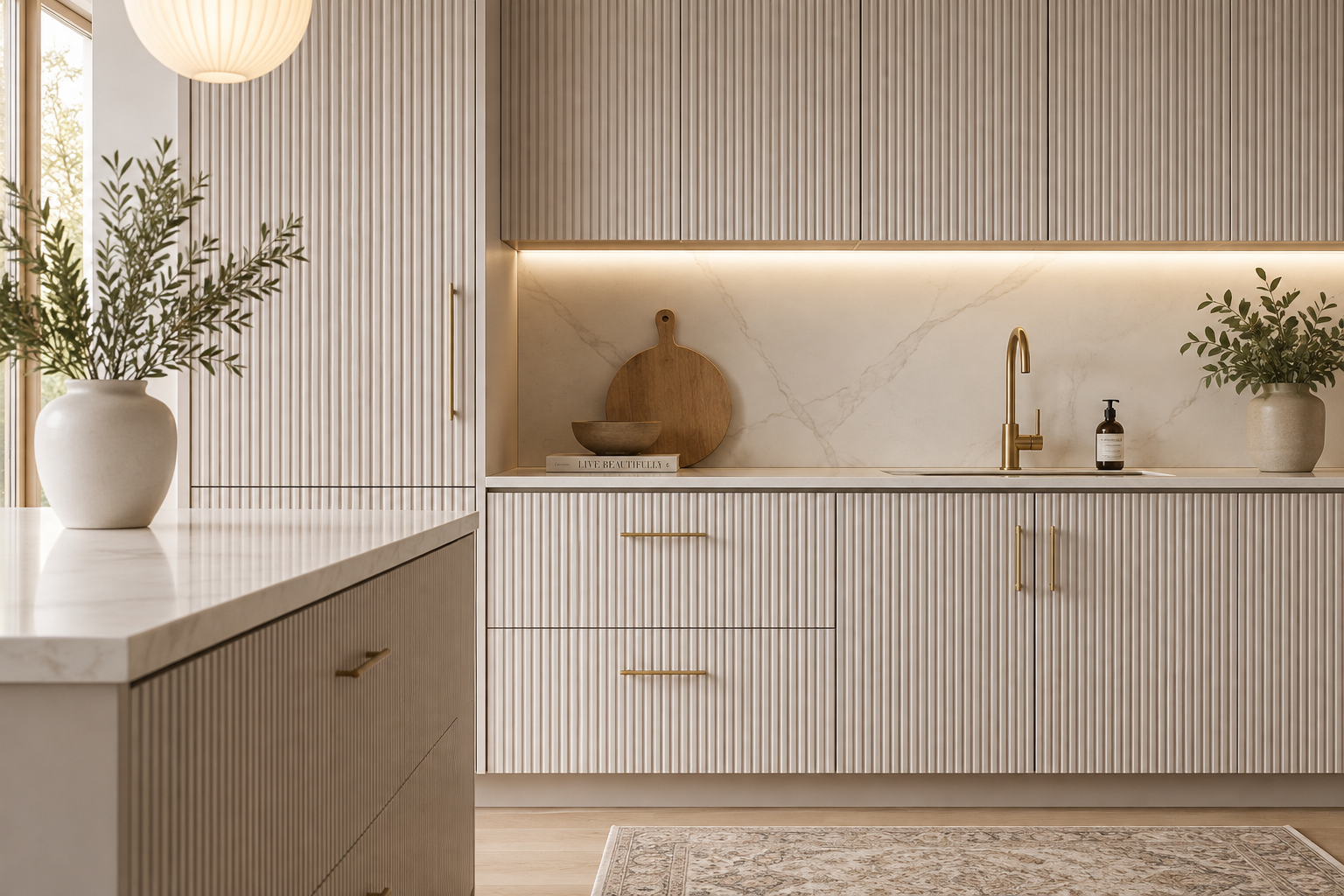
What Are Fluted Cabinet Doors?
Fluted cabinet doors feature a series of vertical concave grooves cut into the door face. The grooves are usually rounded, like tiny half-pipes, and run from top to bottom, giving the cabinet a rhythmic, linear texture. You'll find fluted panels used on base cabinets, upper cabinets, kitchen islands, pantry doors, and display cabinets with fluted glass panels for a softer, diffused look.
The style has roots in classical architecture (think Greek and Roman columns) but feels remarkably fresh in a contemporary kitchen. Some fluted cabinet doors are made entirely of solid wood, while others use MDF with a routed fluted surface, and many custom designs combine wood frames with fluted glass inserts.
Why Homeowners Are Choosing Fluted Cabinet Doors
There's a reason fluted kitchen cabinet doors keep showing up in design magazines and Instagram feeds. They solve a very specific problem: how do you add character to a kitchen without making it feel busy or dated?
Flat cabinets can feel cold. Ornate raised-panel doors can feel heavy. Fluted cabinet doors sit right in the middle. They add tactile interest and beautiful light play (those grooves catch shadows differently throughout the day) while still reading as calm and modern.
They also work across styles. A fluted wood cabinet door in white oak looks perfectly at home in a Scandinavian kitchen. Painted in deep green or navy, the same profile reads as English cottage. Wrapped around a curved island, it becomes sculptural and contemporary.
Popular Materials and Styles
The most common options you'll come across include:
Fluted wood cabinet doors in oak, walnut, cherry, or maple, prized for grain and warmth
Fluted MDF cabinet doors that take paint beautifully and cost less than solid wood
Fluted glass cabinet doors with reeded or ribbed glass set in a wood frame, ideal for upper cabinets or display units
Slim fluted panels used as accent doors, drawer fronts, or island end panels
Sliding fluted door cabinets for pantries and appliance garages where hinged doors take up too much room
Many homeowners also ask about DIY fluted cabinet doors. It's possible with a router and patience, but the depth, spacing, and finish quality of custom fluted cabinet doors made by a skilled shop are difficult to replicate at home.
For a broader look at how these fit into a full renovation, our kitchen cabinet remodel ideas guide covers layouts, finishes, and hardware pairings that work beautifully with textured door fronts.
What is the difference between fluted and reeded cabinet doors?
This is one of the most common questions people ask, and the answer often surprises them.
Fluted doors have concave (inward-curving) grooves. The grooves dip into the surface of the door.
Reeded doors have convex (outward-curving) ridges. The ridges rise up from the surface.
If you run your finger across a fluted door, your finger dips into each groove. Run it across a reeded door, and your finger rolls over each ridge.
Visually, fluted cabinet doors look slightly softer and more shadowed, while reeded doors feel more textured and pronounced. Many people use the terms interchangeably (you'll even see products labeled "fluted reeded cabinet doors"), but true purists always separate the two.
Are fluted cabinets in style?
Yes, and they aren't going anywhere soon. Fluted cabinets have been one of the strongest kitchen trends for the past three years, and every major design forecast for 2026 continues to feature them prominently.
Part of the reason is fatigue with flat, ultra-minimalist cabinetry. Homeowners are asking for warmth, texture, and craftsmanship again, and fluted cabinet doors deliver all three without leaning too traditional. Designers love them because they photograph beautifully, work in both small and large kitchens, and pair with almost any countertop, backsplash, or flooring choice.
They're especially popular in three places: on kitchen islands (as a full wrap or accent panel), on tall pantry cabinets, and as fluted glass cabinet doors on upper display units.
What is the trend in cabinet doors for 2026?
Cabinet door design in 2026 is moving toward texture, natural materials, and character. The era of glossy, feature-free slab doors is quietly fading, and in its place we're seeing:
Fluted and reeded profiles in both wood and painted MDF
Warm wood tones such as white oak, rift-sawn oak, and walnut
Earthy paint colors including deep greens, terracotta, mushroom, and warm off-whites
Mixed materials, like fluted wood lowers paired with fluted glass upper doors
Curved cabinet corners and softer edges throughout the kitchen
The overall direction is quieter, more tactile, and more personal. Kitchens are being designed to feel lived in rather than showroom-perfect, and fluted cabinet doors fit that mood exactly.
If you're planning a project this year, our kitchen remodel design guide walks through how to blend these current trends with layout, budget, and long-term function.
Are fluted cabinets more expensive?
Fluted cabinet doors typically cost more than standard shaker or flat-panel doors, but the price gap depends on the material and construction method.
Here's a rough guide to what you can expect:
MDF fluted cabinet doors cost roughly 10 to 25 percent more than a comparable flat-panel MDF door
Solid wood fluted cabinet doors cost about 20 to 40 percent more than a solid wood shaker door
Custom fluted cabinet doors with premium species or unusual dimensions sit at the highest end
The added cost comes from the extra labor involved in routing, sanding, and finishing each groove. Painted finishes take longer because every groove has to be sprayed evenly, and stained versions require careful sanding to keep the grain consistent inside each curve.
That said, most homeowners don't flute the entire kitchen. A common approach is to use fluted cabinet doors on a single statement area (like the island, pantry, or hood surround) and pair them with simpler shaker or flat-panel doors everywhere else. This keeps the cost manageable while still delivering strong visual impact.
How to Incorporate Fluted Cabinet Doors Without Overdoing It
If you love the look but worry it might feel like too much, a few design moves help keep it balanced:
Use them as accents. Wrap only the island, the pantry wall, or the range hood in fluted panels.
Mix door styles. Pair fluted lowers with shaker uppers, or fluted glass uppers with flat-panel lowers.
Keep the palette calm. Fluted texture already adds movement, so simple paint colors and quiet countertops work best.
Choose the right groove size. Slim, narrow flutes feel modern; wide, deep flutes feel more classical.
Think about lighting. Fluted cabinet doors come alive with warm undercabinet lighting and directional pendants that highlight the grooves.
Custom cabinetmakers can also scale the groove size to match the proportions of your kitchen, which is one of the biggest advantages of going custom over big-box options like Home Depot or IKEA fluted cabinet doors.
Final Thoughts
Fluted cabinet doors have earned their place as one of the defining kitchen design elements of this decade. They add warmth, texture, and quiet personality, and they work across nearly every style from modern farmhouse to contemporary Scandinavian to transitional. Whether you use them everywhere or on a single focal point, they instantly lift a kitchen from ordinary to intentional.
If you're planning a renovation and want to see fluted cabinet doors in person or explore custom options built for your space, our team serves homeowners across Middle Tennessee, including kitchen remodeling in Nashville, Franklin, Brentwood, Spring Hill, Murfreesboro, Thompson's Station and Columbia. Reach out to talk through your project with us.