How to Seal Granite Countertops: A Simple DIY Guide That Actually Works
How to seal granite countertops is one of those questions almost every homeowner runs into a year or two after installation. That gorgeous slab you picked out at the yard? It needs a little care to stay that way. Granite is tough, but it's also porous, which means spilled wine, cooking oil, or even water can slowly work its way into the stone if there's no sealer doing its job. The good news is you don't need a contractor or fancy tools to fix that. Grab a soft cloth, a bottle of quality sealer, and about thirty minutes of your afternoon, and you're set.
I've sealed countertops in my own kitchen probably a dozen times over the years, and I've learned there's a right way and a fast way. This guide covers the right way, minus the fluff. Let's get into it.
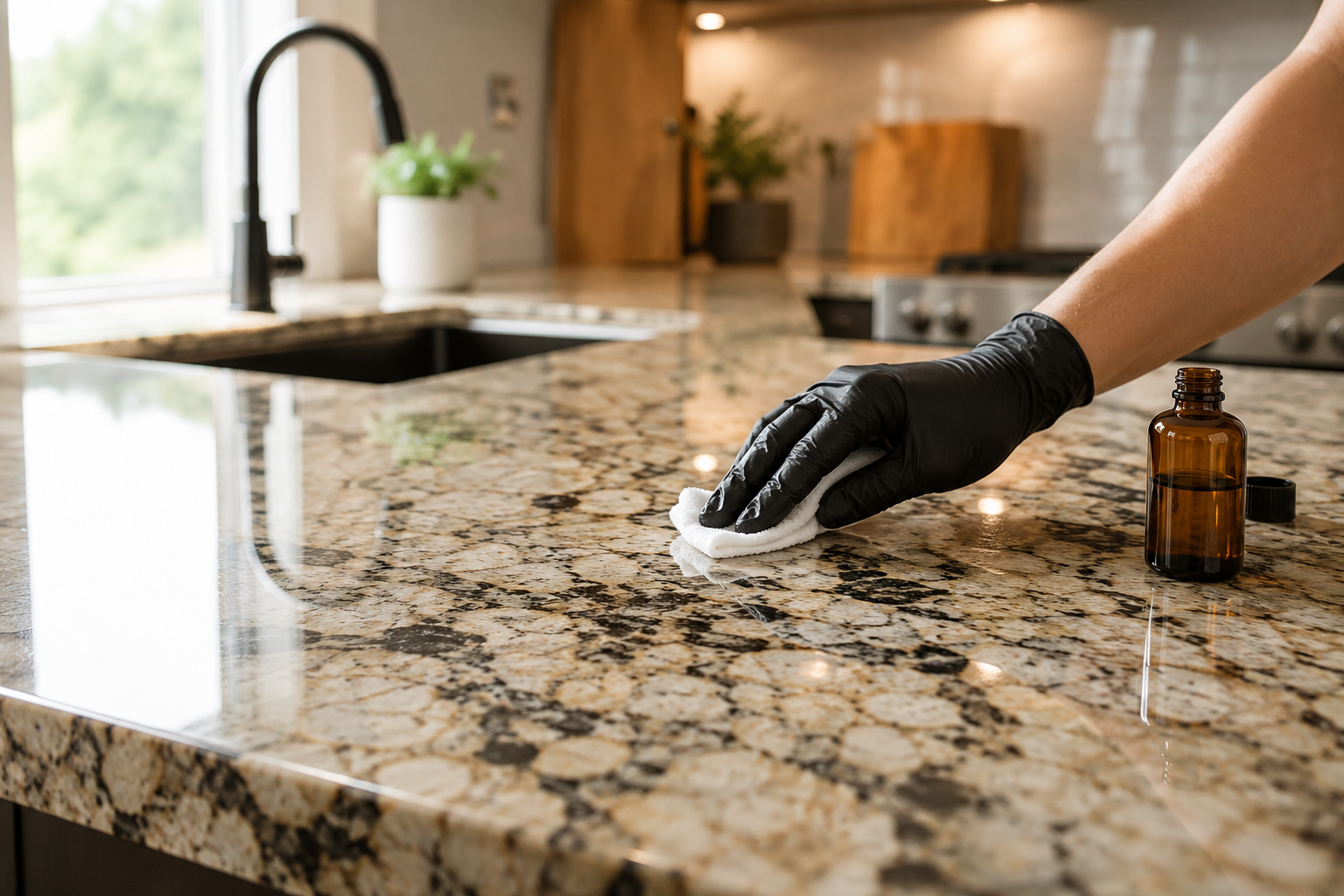
How Often to Seal Granite Countertops
Most granite countertops need sealing once a year. That's the short answer. But how often do you have to seal granite countertops really depends on the color, the density, and how much traffic your kitchen sees.
Lighter granites like white ice or Colonial cream are more porous, so how often do granite countertops need to be sealed for those? Every six to twelve months. Darker slabs like absolute black or Uba Tuba are so dense they might only need it every three to five years. Some slabs barely need it at all.
Here's a simple rule of thumb I use: if water starts soaking into the stone instead of beading on top, it's time. That's your countertop telling you the sealer has worn off. If you're already thinking about broader upgrades, our roundup oftop kitchen trends for 2026 covers the countertop finishes and materials homeowners are picking this year.
How to Tell If Granite Countertop Is Sealed
Before you even open a bottle of sealer, do the water test. Pour a small puddle of water, maybe a tablespoon, right on the surface. Set a timer for fifteen minutes and walk away.
Come back and check. If the water is still sitting there in a puddle, your sealer is working fine and you can skip the job entirely. If the water darkened the stone or soaked in, you need to reseal. This test is the easiest way to tell if a granite countertop is sealed, and it takes almost no effort.
Try the test in a few different spots. Sealer wears unevenly, especially around the sink, cooktop, and the prep areas where you cut and chop the most.
How to Clean Granite Countertops Before Sealing
You cannot skip this step. Sealer traps whatever is on the surface, so if there's grease or old cleaner residue up there, you're locking it in for the next year. How to clean granite countertop before sealing? Warm water, a little dish soap, and a microfiber cloth. That's it.
Wipe the whole surface down, then go over it again with clean water to rinse. Avoid anything with vinegar, lemon, ammonia, or bleach. Those acidic cleaners eat away at granite over time and can dull the finish.
Once the countertop is clean, dry it completely. Let it sit for at least a couple of hours, or overnight if you can. Any moisture trapped under the sealer creates cloudy spots that are a real pain to fix later.
How to Seal Granite Countertops for the First Time
If your slab was just installed and you're wondering how to seal new granite countertops or how to seal granite countertops for the first time, most fabricators actually apply a sealer at the shop before delivery. Ask them. If they didn't, or if you're not sure, go ahead and do it yourself. It won't hurt anything to add another layer.
Give the countertop at least seventy-two hours after installation before sealing. This gives the caulking and adhesive time to cure fully. Rushing this step can trap fumes and cause bonding issues down the line. If you're still in planning mode or considering a full refresh, our guide to kitchen cabinet remodel ideas pairs well with any countertop upgrade.
How to Apply Granite Countertop Sealer
Now for the actual application. Here's the step by step process on how to apply granite countertop sealer the right way:
Pick your product. Impregnating sealers like Miracle 511 or Granite Gold Sealer both work great. If you want to know how to apply 511 impregnator sealer to granite countertops, the process is basically the same as any impregnator: spray or wipe on, wait, buff off.
Shake the bottle well. Some sealers separate on the shelf.
Spray or pour a thin layer across a small section, maybe two feet by two feet at a time.
Use a clean, dry microfiber cloth to spread the sealer evenly. Don't flood the surface. A little goes a long way.
Let it sit for the time listed on the bottle. Usually five to fifteen minutes.
Buff off the excess with a fresh dry cloth before it dries on the surface. If it dries into a haze, you'll have to redo that section.
Move to the next section and repeat.
For extra protection, apply a second coat about twenty minutes after the first. Two thin coats hold up much better than one heavy one.
How Long to Wait After Sealing Granite Countertops
Patience pays off here. How long to wait after sealing granite countertops before you start using them? At least twenty-four hours. Some sealers need forty-eight. Check the label.
During that window, don't set anything on the counter. No spice jars, no coffee maker, nothing. The sealer needs air and time to cure fully into the pores of the stone. If you rush and start cooking on it the same night, you can leave marks that just don't come out.
How to Clean Granite Countertops After Sealing
Once your countertop is sealed, keep it that way with the right daily habits. How to clean granite countertops after sealing? Same routine as before: warm water, mild dish soap, soft cloth. Wipe up spills right away, especially anything acidic like tomato sauce, coffee, or wine.
For a nice shine, you can use a granite-specific cleaner once or twice a week. Skip the generic sprays under the sink. Windex, Clorox wipes, and dish soap loaded with degreasers will wear down your sealer fast. That's the number one reason people end up needing to reseal every six months instead of every year.
How to Seal Granite Countertops in Kitchen and Bathroom
The process is identical whether you're working on the kitchen island or a bathroom vanity. The only real difference is exposure. Kitchens see more heat, more grease, more acid. Bathrooms see more water and more cosmetic products like perfume and hairspray, which can also stain if the sealer is weak.
If you're figuring out how to seal granite bathroom countertops, pay extra attention around the sink edges and faucet base. That's where water pools and slowly eats through sealer over time. The same goes for how to seal outdoor granite countertops if you have a grill station or outdoor kitchen. Outdoor slabs face sun and rain, so plan on sealing twice a year instead of once.
How Much Does It Cost to Seal Granite Countertops
Doing it yourself is cheap. A quality bottle of sealer runs between twenty and forty dollars, and one bottle covers most kitchens with plenty left over for touch-ups. If you're on a tight budget for the whole space, our guide to an inexpensive kitchen remodel has plenty of low-cost ideas that pair well with a DIY sealing job.
If you hire a pro, expect to pay somewhere between one hundred fifty and four hundred dollars depending on the size of your counters and where you live. So how much to seal granite countertops professionally? Not a bad price for peace of mind if you're not comfortable doing it yourself, but honestly, the DIY route works just as well for most people. Sealing regularly also helps protect the long-term value of your space, which matters more than you might think based on the numbers in our post on how much does a kitchen remodel increase home value.
How to Remove Sealer from Granite Countertops
Sometimes sealer gets applied too thick, or an old coat starts hazing and looking cloudy. How to remove sealer from granite countertops in that case? You'll need a stone-safe stripper, which most home improvement stores carry.
Apply the stripper according to the label, let it dwell, then scrub gently with a nylon pad. Rinse with water and let the surface dry completely before resealing. This is also the answer for how to remove granite countertop sealer if you ever want to switch to a different product.
For minor haze, sometimes a good scrub with warm water and a soft cloth is enough to strip the top layer without needing a chemical remover.
Final Thoughts
Sealing granite is one of those maintenance jobs that sounds intimidating but really isn't. Once you do it once, you'll wonder why you waited so long. Test with water, clean thoroughly, apply thin coats, and give it time to cure. That's the whole game.
Your countertops will thank you with years of stain-free service and that just-installed look. Not bad for thirty minutes of work.
If your granite has seen better days and you're thinking it might be time for a bigger upgrade instead of another round of sealer, we'd love to help. Our team handles complete kitchen remodeling in Nashville, TN, custom kitchen remodeling in Franklin, and full renovations for kitchen remodeling in Brentwood, Spring Hill,Thompson's Station, Columbia and Murfreesboro. Reach out and let's talk about your space.