Two Tone Kitchen Cabinets: Ideas, Color Combos, and What Homeowners Actually Get Wrong
There's a reason two tone kitchen cabinets keep coming up in every renovation conversation across Middle Tennessee. They solve a real problem how do you make a kitchen feel bigger, more personal, and more finished without committing to a single color across every wall of cabinetry?
Most of what's written about them skips the practical part. You get mood boards and color swatches. What you rarely get is honest guidance about which combinations hold up over years of daily use, how to approach painting cabinet doors a different color than the frame without creating a patchy mess, and whether the look is going to feel dated before you're ready to sell.
This guide covers all of it. If you're still piecing together a full remodel plan, our kitchen remodel planner guide connects design choices like these to layout, budget, and sequencing.
What Are Two Tone Kitchen Cabinets and Why Do Homeowners Choose Them?
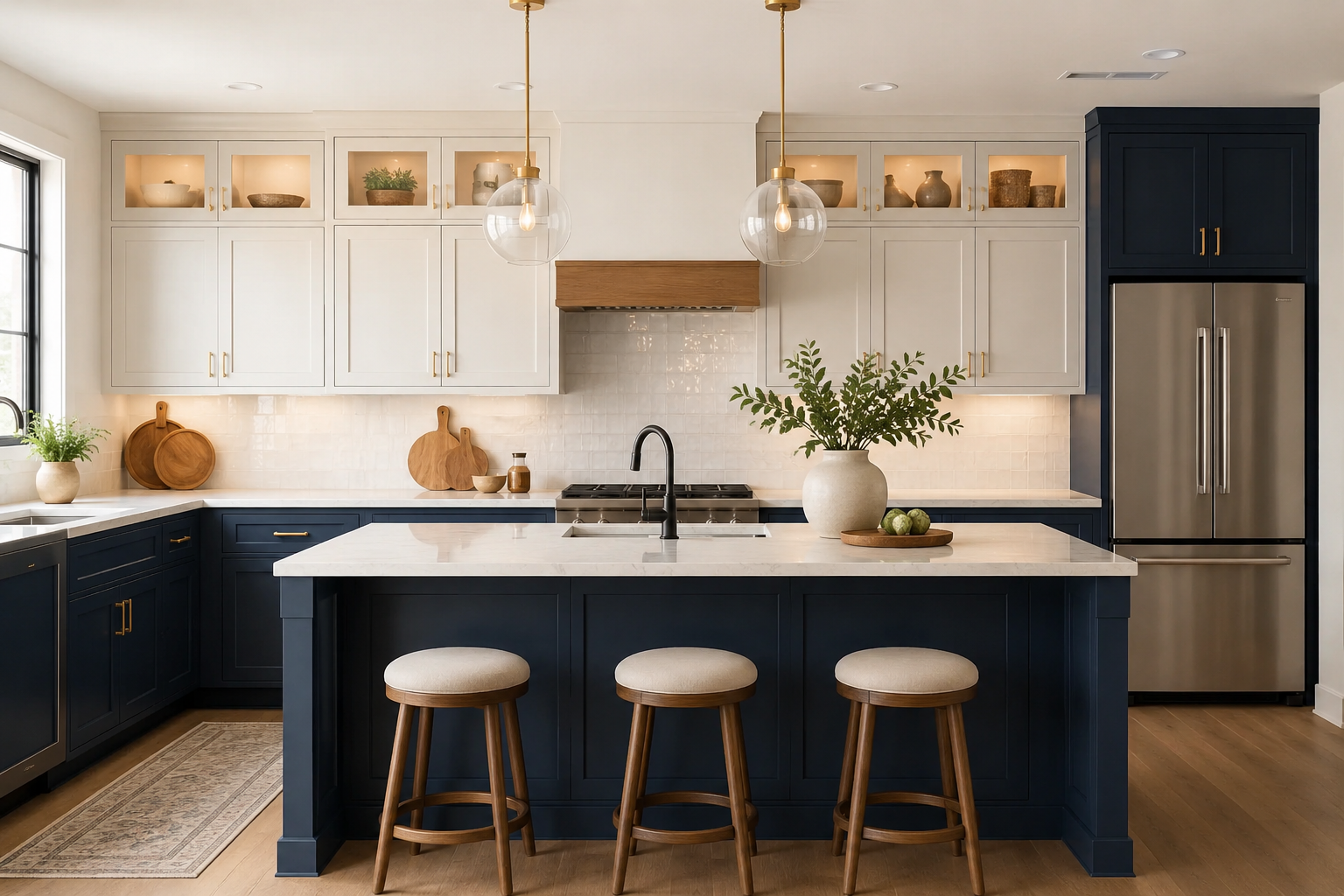
Two tone kitchen cabinets means your upper and lower cabinets are finished in two different colors or materials. Sometimes the island is a different color from the perimeter run. In some cases, it means the door panel and frame are painted in different colors. The exact setup varies but the logic is the same: contrast creates visual depth and a designed-rather-than-defaulted feeling.
A single-tone kitchen especially all-white or all-gray can feel flat. Two tones in a kitchen space fix that by drawing the eye to different zones, letting you bring in bolder choices in one area while keeping things open elsewhere. You can use a forest green or deep navy on the lowers without making the whole kitchen feel heavy.
Two Tone Kitchen Cabinet Ideas That Work in Real Homes
Most ideas you find online show showrooms or staged properties. Here's how these translate into livable spaces.
Upper light, lower dark is the most classic setup and for good reason. Light uppers keep the ceiling feeling tall. Dark lowers ground the space and hide scuffs far better over time. This format works with almost every layout L-shape, U-shape, galley, and open plan.
Island as a different color is an underused move. When the perimeter cabinetry is one color and the island is another, the island reads more like a piece of furniture than a built-in. A black island with white perimeter cabinets. A warm wood island surrounded by painted white cabinetry. Both are reliable combinations that also show up in our top kitchen trends for 2025 for good reason.
Pantry or tall cabinet as accent works well in kitchens where a floor-to-ceiling pantry creates a natural focal point. Paint it a contrasting color while keeping the rest of the kitchen in a neutral and you add drama without overwhelming the room.
Two Tone Kitchen Cabinets Gray and White: The Combination That Keeps Working
White uppers keep things feeling clean and bright. A gray lower run adds weight and sophistication without going dark enough to make the space feel closed in. And unlike trendier pairings, this combination works with almost every countertop white quartz, honed marble, butcher block, dark granite, or soapstone.
The real question is which gray and which white. Grey two tone kitchen cabinets hold up best when the gray reads warm. Cool grays with blue or green undertones can feel cold, especially in Tennessee homes where natural light tends to run warm through most of the day. Warm grays greige, putty, stone tones stay livable across all lighting conditions.
For the white, a stark bright white often clashes when countertops are warm-toned. Soft whites and off-whites read more elegantly in most kitchen environments. If you want something softer still, two tone taupe kitchen cabinets which sit between warm gray and beige offer a quieter take on the same visual principle.
Two Tone Black and Wood Kitchen Cabinets: Bold and More Forgiving Than People Expect
Two tone black and wood kitchen cabinets is the combination homeowners hesitate on and then consistently don't regret. Black grounds the space without competing with countertops or backsplash when it's used as an anchor element rather than an all-over treatment.
Two tone stained kitchen cabinets are worth knowing about as a variation: instead of paint, both tones come from staining at different depths a lighter stain on uppers, a richer deeper stain on lowers. This works best on wood species that absorb stain evenly, like maple. Open-grain species like hickory or knotty alder create more variation, which reads as rustic rather than refined not wrong, just intentional.
Modern Two Tone Kitchen Cabinets: What Modern Actually Means
Modern two tone kitchen cabinets typically combine flat-front or minimal-profile shaker doors, a clean color palette, and restrained hardware sometimes no visible hardware at all. The contrast between the two colors is graphic and intentional rather than decorative.
Modern two-tone kitchen cabinets wood and white is one of the most requested combinations. White painted perimeter cabinetry with a warm wood-grain island adds warmth and texture while keeping the overall read from feeling heavy. Grey modern two tone kitchen cabinets swap the wood element for a cooled-down gray on the lowers against white or pale off-white uppers polished and calm without feeling cold.
Farmhouse Two Tone Kitchen Cabinets: Getting the Warmth Right
Farmhouse two tone kitchen cabinets operate on different visual logic from the modern configurations above. Where modern leans cool and graphic, farmhouse leans warm, layered, and textural.
The classic setup involves creamy or warm white uppers never stark white paired with warm wood, warm brown, or a muted earth tone on the lowers. What separates a kitchen that genuinely reads as farmhouse from one that just looks like mismatched paint is texture. Distressed finishes, beadboard inset panels, furniture-style feet on the base cabinets these details make the two-tone decision feel deliberate.
Two tone green kitchen cabinets in a farmhouse context sage, olive, or muted forest greens against warm cream have real staying power. In Tennessee homes with good natural light and warm wood floors, this is one of the better-performing combinations.
Two Tone Painting Kitchen Cabinet Doors Different Color Than Frame: How to Actually Do It
Step 1 Commit to a shared undertone. The door panel and the frame must share a temperature. A warm cream frame paired with a cool sage panel looks off. That same frame with a warm soft sage reads perfectly. This is where most DIY attempts fall apart.
Step 2 Decide which color leads. The frame occupies more visual surface area than the inset door panel. If you want the neutral to dominate, make it the frame. If you want the accent to stand out, make the door panel the accent.
Step 3 Match the sheen across both. A satin frame next to a flat panel creates an inconsistency that becomes more obvious as light shifts through the day. A consistent eggshell or satin across both reads as intentional.
Step 4 Test one door in place first. Hang it back in the cabinet opening and live with it for a few days before committing. What looks right under a paint-store light can read very differently in your actual kitchen at different times of day.
Are Two Tone Kitchen Cabinets Still in Style? The Honest Answer
Two tone kitchen cabinets are not a fad. They're a design principle the same way contrast and visual depth are design principles. What goes in and out of fashion is specific color combinations, not the underlying logic of using more than one finish across a kitchen.
Are two tone kitchen cabinets a good idea? Yes when colors are chosen thoughtfully, when they suit the home's architecture and adjacent finishes, and when execution is done right. A sloppily painted two-tone kitchen looks worse than a clean single-tone one. The idea itself isn't the risk; poor execution is.
What does date is chasing a specific combination because it performed well on Pinterest in a particular year, without thinking about how it integrates with everything else already in the room.
From Two Tone Cabinet Ideas to a Full Kitchen Remodel
Choosing your cabinet colors is a design decision but it lives inside a larger project. Your colors have to work with your countertop material, backsplash, hardware, flooring, and the natural light in your specific kitchen. What looks right in a showroom rarely translates directly to a ranch house in Spring Hill or a transitional new build in Brentwood without adjustment.
If you're still in the planning phase, our kitchen remodel planner guide connects design choices like cabinet color to the full scope of a project layout, budget, and what to decide first. For a look at how color and finish decisions work inside an actual custom cabinetry build, our kitchen design process starts with your specific space. And our style and color guide shows the full range of finishes and material combinations we work with most.
If you're in Middle Tennessee and ready to move from saving screenshots to building an actual plan, reach out through our contact page or explore what we've done in your area:
Kitchen remodeling in Nashville, TN | Kitchen remodeling in Franklin, TN | Kitchen remodeling in Brentwood, TN | Kitchen remodeling in Spring Hill, TN | Kitchen remodeling in Murfreesboro, TN | Kitchen remodeling in Thompson's Station, TN | Kitchen remodeling in Columbia, TN