Kitchen Wall Cabinets: Sizes, Styles and Smart Storage Ideas
Kitchen wall cabinets are the upper storage units mounted above the countertop that hold dishes, glassware, pantry items and small appliances while shaping the entire look of the room. In most homes they cover the space between the counter and the ceiling, which makes them one of the most visible parts of any kitchen. Choosing the right size, style and layout of kitchen wall cabinets can turn a cramped cooking area into something that feels roomy, organized and genuinely pleasant to work in. Whether you are building from scratch or reworking a tired layout, this guide walks through the sizes, styles, and small details that actually matter.
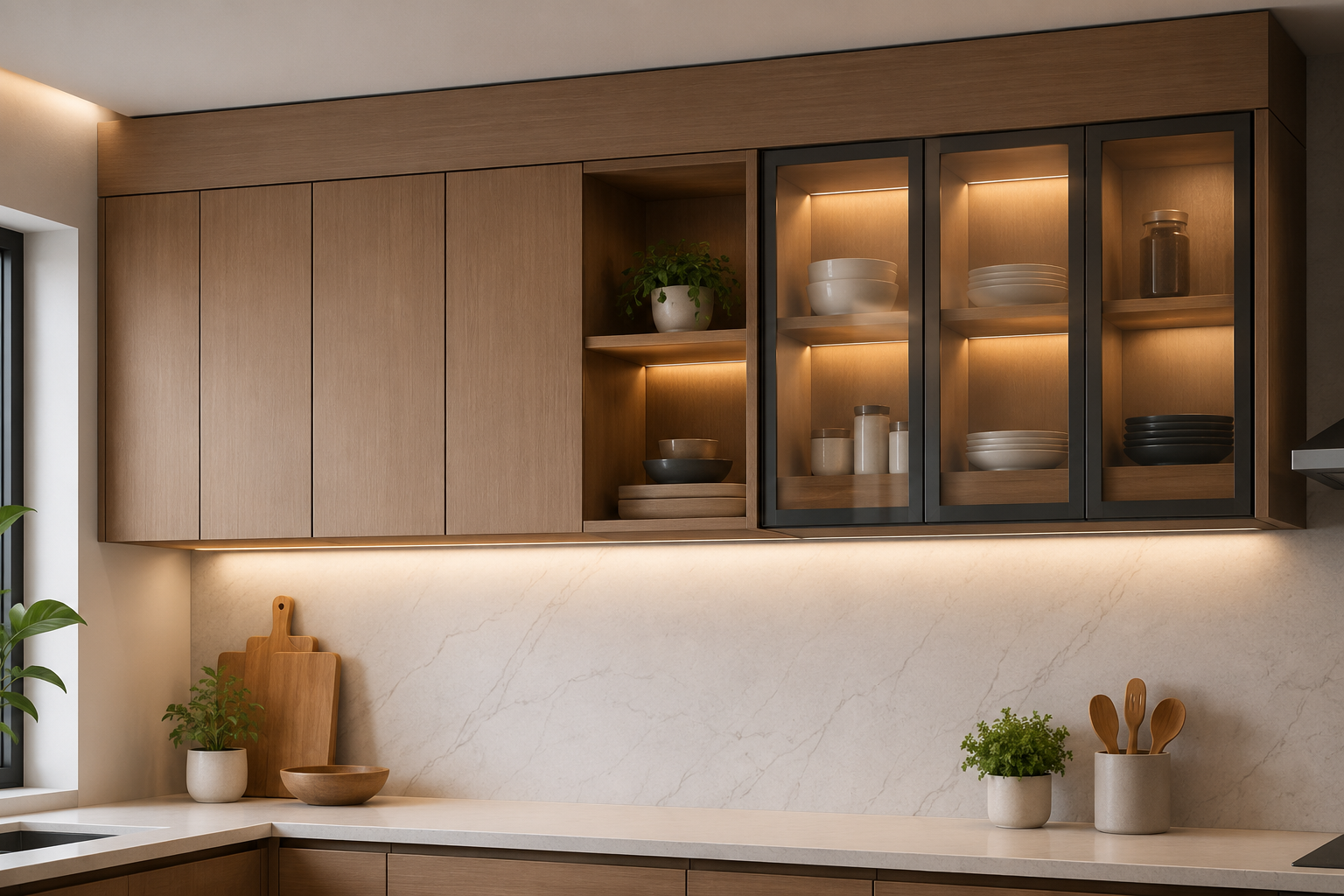
What Kitchen Wall Cabinets Do (and Why They Matter)
The wall cabinet in a kitchen carries a lot of weight, both literally and design-wise. Base cabinets hold your heavy stuff. Wall cabinets, meanwhile, keep your everyday items within easy reach and set the visual rhythm of the room. Get them wrong and the space feels boxy or top-heavy. Get them right and everything just flows.
At SH Design Woodcraft, we build custom kitchens for homeowners across Middle Tennessee, and one thing we notice again and again is that people underestimate how much the wall cabinets shape the whole feel of a remodel.
Standard Kitchen Wall Cabinet Sizes and Dimensions
Before you start picking styles, it helps to know the numbers. Standard kitchen wall cabinet sizes follow a fairly predictable range, though custom builds can go beyond them when the layout calls for it.
Typical dimensions include:
Widths: 9, 12, 15, 18, 21, 24, 27, 30, 33, 36, 42, and 48 inches
Heights: 12, 15, 18, 24, 30, 36, and 42 inches
Depths: 12 inches is standard, though 15 and 24 inches are used for microwave shelves and over-fridge cabinets
The standard kitchen wall cabinet height most people picture is 30 or 36 inches, mounted 18 inches above the countertop. That 18-inch gap gives you room for a stand mixer or coffee bar underneath.
Kitchen wall cabinet depth also matters more than folks realize. Twelve inches feels light on the eye but limits what you can store on the top shelf. If plates and platters are important to you, ask about deeper builds during the design phase.
Tall Kitchen Wall Cabinets and Floor-to-Ceiling Options
Tall kitchen wall cabinets, usually 42 inches high, run right up to an 8-foot ceiling and eliminate the dust-collecting gap on top. Some homeowners take this even further and go floor-to-ceiling with kitchen cabinets that stretch across an entire wall.
Full wall kitchen cabinets create a wall-of-cabinets look that reads as clean and modern, and they add serious storage. The trade-off is that the top shelves become step-stool territory, so they work best for holiday dishes, appliances you rarely touch, or specialty bakeware.
For homes in Franklin and Brentwood with taller ceilings, we often recommend a stacked approach: standard cabinets below, shorter glass-door cabinets above. It breaks up the visual weight and gives you a spot to show off nicer pieces.
Kitchen Wall Cabinets with Glass Doors
Kitchen wall cabinets with glass doors are one of those features that never really goes out of style. A run of solid doors with two or three glass-front cabinets mixed in gives a kitchen depth and personality without leaning too far into any single trend.
You have options here too. Clear glass shows everything. Seeded or reeded glass hides the clutter while still letting light through. Mullion patterns add that classic detail people associate with older, well-built homes. Just remember that whatever sits behind glass will be seen, so those cabinets need to stay tidy.
Corner Kitchen Wall Cabinets
Corners are where kitchens either work hard or waste space. A corner kitchen wall cabinet solves the problem by turning that awkward angle into usable storage. There are two main approaches:
Diagonal corner cabinets with a single door that opens to a wide interior
Blind corner cabinets that tuck into the corner and pair with the adjacent run
The diagonal style tends to be easier to reach into, especially for shorter cooks. In smaller kitchens across Spring Hill and Thompson's Station, where every inch counts, the corner cabinet is usually where we spend the most planning time.
White Kitchen Wall Cabinets and Other Finishes
White kitchen wall cabinets remain the most requested finish year after year, and for good reason. White reflects light, plays well with almost any countertop, and does not lock you into a specific style. Shaker fronts in a soft white are still the safest long-term pick, though warmer creams have been gaining ground lately as pure white starts to feel a little sterile.
If you want more character, consider two-tone kitchens where the base cabinets pick up a deeper color and the wall cabinets stay light. This keeps the room feeling open while adding contrast at eye level. Wood-grain uppers over painted bases are another look that photographs beautifully and holds up over time.
Kitchen Wall Storage Cabinets for Small Kitchens
Small kitchen wall cabinets do not have to feel like a compromise. The trick is choosing the right interior fittings. Pull-out shelves, plate racks, built-in spice organizers, and cabinet-mounted lids for cutting boards can double the effective storage of a modest cabinet run.
A few practical kitchen wall cabinet ideas that work well in tight spaces:
Skip the soffit and run cabinets to the ceiling instead
Use open shelving on one wall to keep the room from feeling closed in
Choose lighter finishes to bounce natural light around
Add under-cabinet LED strips for both function and warmth
Homeowners in Kitchen remodeling Nashville, TN bungalows and older Columbia homes often work with kitchens under 150 square feet. Good wall cabinet planning is usually what makes those spaces feel like real kitchens instead of hallways with a stove parked in them.
How to Install Kitchen Wall Cabinets Safely
If you are handy and thinking about a DIY route, knowing how to install kitchen wall cabinets properly matters more than any other step in a remodel. A wall cabinet holds serious weight once it is loaded with dishes, and a bad install can pull straight out of drywall.
The basic sequence goes like this:
Find the studs and mark them clearly
Snap a level line for the bottom of the cabinets
Screw a temporary ledger board along that line to rest the cabinets on
Start with the corner cabinet, then work outward
Use at least two 2.5 or 3-inch screws per cabinet into solid studs
Clamp cabinets together at the face frames before final screwing
The most common reason kitchen cabinets fall off the wall is skipped studs or short screws driven only into drywall anchors. If your studs do not line up with your cabinet backs, you may need to add blocking behind the drywall before the cabinets go up. That extra step adds an hour to the job and saves a lot of grief later.
For most homeowners, hiring a builder is worth it, especially when custom cabinets are involved. A crooked install shows on every door reveal and every gap between doors.
Custom Kitchen Wall Cabinets in Middle Tennessee
Off-the-shelf cabinets work fine when a kitchen is square, the ceiling is a standard height, and no surprises show up behind the drywall. Middle Tennessee homes, though, rarely play by those rules. Older homes in Murfreesboro and the historic parts of Franklin often have out-of-plumb walls, quirky ceiling heights, and structural details you have to design around.
Custom kitchen wall cabinets solve this by starting with your actual space instead of a catalog. That means:
Cabinets sized to your ceilings, not the nearest 6-inch increment
Corners built to your walls, not assumed to be square
Interior fittings chosen for what you actually cook and store
Finishes matched to the rest of your home
We build every cabinet in-house, which lets us adjust details as the project moves. If you are thinking about a kitchen remodel, take a look at some of our recent work on the SH Design Woodcraft site and reach out when you are ready to talk through your space.
Good kitchen wall cabinets do not shout for attention. They just make the kitchen work better every single day and that is really the whole point.