Farmhouse Kitchen Cabinets: The Complete Style & Color Guide
There's a reason farmhouse kitchen cabinets haven't gone out of style the way other trends have. They don't chase a moment. A well-built farmhouse kitchen still looks right ten years later, because the whole point of the style is warmth and function over flash. Shaker doors, honest materials, a color palette that feels lived-in rather than staged.
But "farmhouse" gets used loosely online, and most guides stop at a Pinterest board. They show you twenty photos and call it a day. What they skip is the part that actually matters: which colors are holding up in real kitchens right now, which finishes are worth the money, and where the style tends to go wrong. That's what this guide covers.
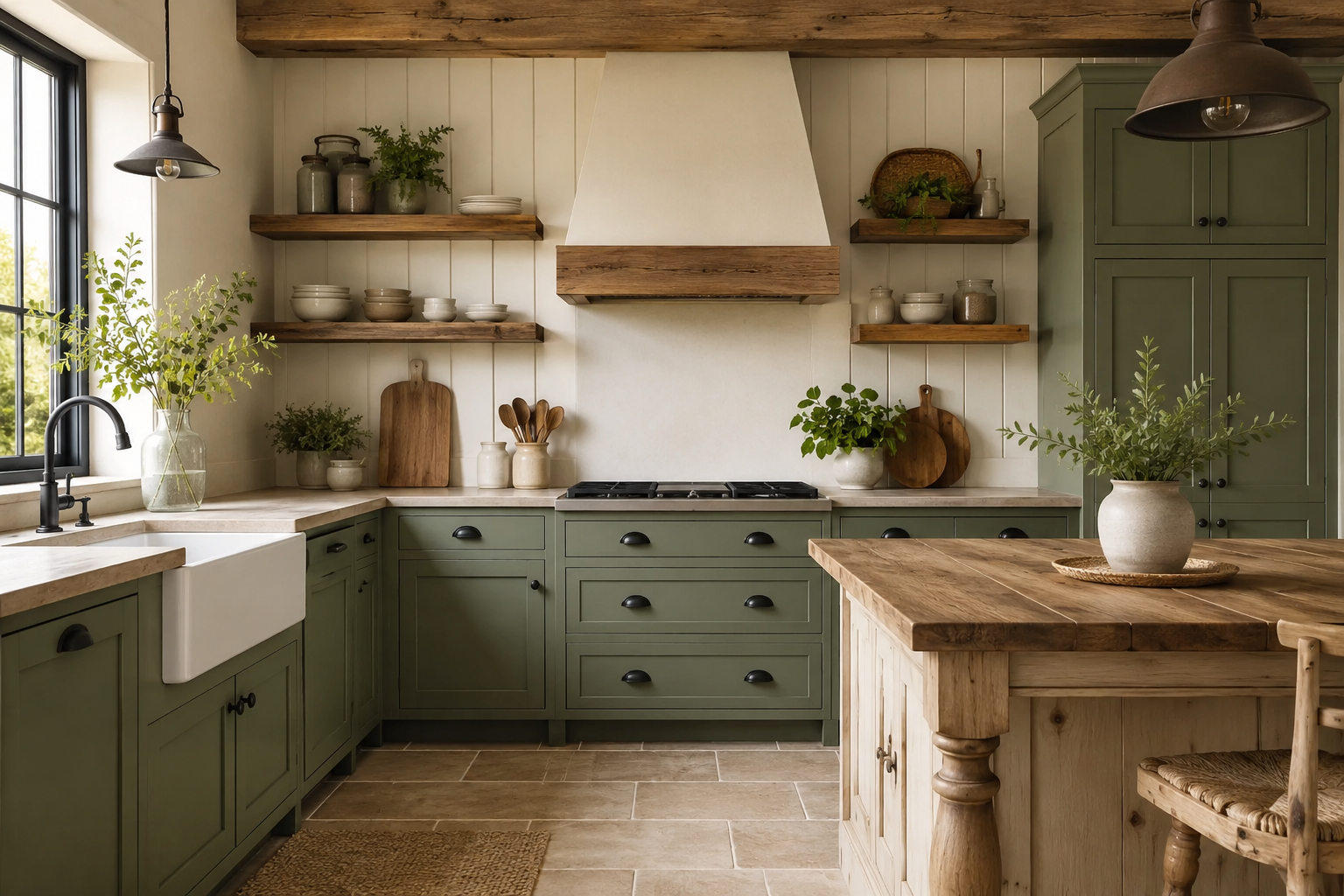
Modern Farmhouse Kitchen Cabinets: Balancing Old and New
Modern farmhouse kitchen cabinets take the bones of traditional farmhouse design, Shaker profiles, natural wood tones, apron sinks, and pair them with cleaner lines and less ornamentation. Think flat-panel or simple Shaker doors instead of raised panels, matte black or brushed brass hardware instead of oil-rubbed bronze, and quartz countertops standing in for butcher block in busier households.
The reason this hybrid works so well is that it photographs current without feeling trendy. A kitchen that's too literally "farmhouse", distressed everything, shiplap on every wall, ages fast. A modern farmhouse kitchen with wood cabinets and simple lines doesn't. If you're weighing which direction to take your own layout, our guide on kitchen cabinet remodel ideas breaks down door styles and finish combinations that pair well with this look.
Farmhouse White Kitchen Cabinets: The Timeless Foundation
Farmhouse white kitchen cabinets remain the single most searched combination in this style, and for good reason. White cabinetry bounces light around a room, makes a smaller farmhouse kitchen feel bigger, and gives you a neutral base to build texture on top of, wood shelving, a stone backsplash, black hardware.
Where people get it wrong is picking a stark, cool white that fights the warmth farmhouse design is built around. A soft, slightly warm white (think antique white or a warm off-white rather than bright white) reads more authentic and ages better. Farmhouse white kitchen cabinets with black hardware is a particularly strong pairing right now, the contrast keeps the room from feeling flat, and it works whether your farmhouse kitchen backsplash with white cabinets leans classic subway tile or a more textured zellige.
Farmhouse Sage Green Kitchen Cabinets: 2026's Breakout Color
If there's one color driving the farmhouse cabinet conversation this year, it's this one. Farmhouse sage green kitchen cabinets have moved from niche to mainstream fast, and it's not hard to see why. Sage sits in that sweet spot between color and neutral. It's muted enough to feel timeless but has enough personality to stop a kitchen from feeling generic.
Country style farmhouse sage green kitchen cabinets tend to pair best with brass or unlacquered hardware and warm wood countertops, the softness of the green needs a warm counterpoint or the whole room can feel cold. For homeowners leaning more rustic, rustic sage green kitchen cabinets with visible wood grain or a lightly distressed finish lean into the farmhouse story even harder. It's a color that photographs beautifully in natural light, which is part of why it's dominating design feeds right now.
Farmhouse Blue Kitchen Cabinets for a Bold Statement
Farmhouse blue kitchen cabinets work when you want personality without going full color-drenched. Navy is the most common route, farmhouse navy kitchen cabinets read classic and coastal-adjacent at the same time, and they pair exceptionally well with brass hardware and white or butcher block counters.
Lighter, dustier blues (think a faded denim or slate) lean more cottage than coastal, and tend to suit older farmhouse-style homes with more traditional trim and molding. Blue is one of the few colors in this style that works equally well on a full kitchen or just an island, which makes it a low-commitment way to test the look before going all-in.
Farmhouse Black Kitchen Cabinets for Dramatic Contrast
Farmhouse black kitchen cabinets shouldn't work on paper, black feels heavy, farmhouse feels light, but in practice the contrast is what makes it click. Farmhouse black kitchen cabinets with wood countertop is the classic execution: the warmth of the wood keeps the black from feeling cold or overly modern.
This is also a color where finish choice matters more than usual. Joanna Gaines farmhouse black kitchen cabinets, a look plenty of homeowners reference directly, typically use a matte or satin black rather than high gloss, which keeps the room feeling grounded instead of stark. Black works best as either a full commitment (all cabinets) or a deliberate contrast (island only against white perimeter cabinets), rarely in between.
Farmhouse Cream Kitchen Cabinets: Soft and Warm
Farmhouse cream kitchen cabinets sit one shade warmer than white, and that small shift changes the whole feel of a room. Cream reads softer, more vintage, and hides everyday kitchen wear (fingerprints, light scuffs) better than a true white does.
It's a particularly strong choice for country farmhouse white kitchen cabinets that felt too clinical in a mockup, cream gives you that same clean base without the coolness. Pair it with warm brass or aged nickel hardware and it leans convincingly antique without looking dated.
Farmhouse White Oak Kitchen Cabinets: Natural Texture
Farmhouse white oak kitchen cabinets have become one of the fastest-growing searches in this category, and it's a shift worth paying attention to. Painted cabinets dominated the last decade, but white oak (and natural wood tones generally) are pulling attention back toward visible grain and texture.
The appeal is straightforward: farmhouse natural wood kitchen cabinets feel more honest to the original farmhouse aesthetic than any painted finish can. White oak specifically has a straighter, more even grain than red oak, which keeps it from feeling too busy or dated. It pairs well with both farmhouse kitchen with oak cabinets in a fuller wood palette and mixed setups where wood upper cabinets sit above a painted lower run. If you're deciding between painted and natural finishes, our breakdown on the best wood for kitchen cabinets compares how species like oak, maple, and hickory hold up over time and which take stain most evenly.
Farmhouse Two Tone Kitchen Cabinets: Best of Both Worlds
Farmhouse two tone kitchen cabinets solve a real design problem: an all-white kitchen can feel flat, and an all-color kitchen can feel like a lot. Two tone splits the difference. The most common combination is a painted perimeter (white or cream) with a contrasting island, sage green, navy, or a deep charcoal.
Farmhouse two tone kitchen cabinets brown and white is another strong pairing, especially in kitchens with hickory or oak flooring already in place, since it echoes the wood tone rather than fighting it. The rule that keeps two tone from looking accidental: pick one color for the "quiet" cabinets (perimeter) and let the second color do the talking on a single focal point, usually the island.
Farmhouse Kitchen Cabinet Hardware That Completes the Look
Cabinets get most of the attention, but farmhouse kitchen cabinet hardware is what makes or breaks whether a kitchen actually reads as farmhouse or just looks like a painted kitchen. Cabinet hardware for farmhouse kitchen use tends to fall into a few reliable categories: aged or unlacquered brass, matte black, and bin-style or cup pulls on drawers paired with knobs on doors.
Farmhouse kitchen cabinet knobs in a rounded, slightly imperfect shape (cast iron, forged black, aged brass) read more authentic than a sleek, uniform pull. It's a small detail, but hardware is one of the cheapest ways to shift a kitchen's whole personality without touching the cabinet boxes themselves.
Rustic Farmhouse Kitchen Cabinets: Leaning Into Texture
Rustic farmhouse kitchen cabinets push further into visible imperfection than the standard farmhouse look, think knotty pine, hand-scraped finishes, or intentionally distressed edges. Rustic farmhouse hickory kitchen cabinets are a strong choice here, since hickory's natural color variation does a lot of the rustic work without any artificial distressing needed.
This direction tends to suit larger, more traditional homes best, a rustic grey kitchen cabinets finish or rustic red kitchen cabinets accent can feel like a lot in a smaller, more modern floor plan. Vintage farmhouse kitchen cabinets, reclaimed wood, visible saw marks, worn hardware, sit at the far end of this spectrum and work best when the rest of the home's architecture supports it.
Farmhouse Kitchen Cabinet Colors: How to Choose Yours
With this many farmhouse kitchen cabinet colors to choose from, the decision usually comes down to three questions: how much natural light the kitchen gets, what's already fixed in the room (flooring, countertops), and how long you want the color to feel current.
North-facing kitchens with less natural light tend to wash out cooler colors like grey or navy, farmhouse grey kitchen cabinets with butcher block countertops can look flat without enough warm light to balance them. South and west-facing kitchens have more flexibility, they can carry darker colors like black or deep green without feeling closed in. And if you're planning to sell within the next five years, whites, creams, and sage tend to hold resale value better than a very saturated color like farmhouse red kitchen cabinets or farmhouse yellow kitchen cabinets, both of which are strong choices for a forever home but a narrower audience for resale.
Farmhouse Kitchen Cabinet Ideas by Room Size
Not every farmhouse kitchen cabinet idea works in every space. In a smaller kitchen, farmhouse white shaker cabinets paired with open shelving keep the room feeling airy, while a full run of dark or heavily textured cabinets can make a small farmhouse kitchen with wood cabinets feel closed in fast.
Larger kitchens have more room to play, this is where two-tone layouts, a dedicated farmhouse kitchen pantry cabinet, or a full farmhouse kitchen sink cabinet built around an apron sink really get to shine. If storage is the bigger priority for your layout, our guide to kitchen storage cabinets and kitchen pantry cabinet options covers configurations that work particularly well with farmhouse-style cabinetry.
Where Most Farmhouse Kitchens Actually Fall Short
Most content on this topic stops at inspiration. What it skips is the practical side: cheap MDF farmhouse cabinets chip and swell around the sink within a few years, distressed finishes done with a kit rather than by hand tend to look artificial up close, and hardware bought to match a photo rather than the actual door profile often sits wrong. A farmhouse kitchen holds up when the cabinet construction, wood species, and finish are chosen for the specific space, not copied wholesale from a photo.
That's the gap between a farmhouse kitchen that looks good in a listing photo and one that still looks good in year eight.
At SH Design Woodcraft, we build custom farmhouse cabinetry for homeowners across Middle Tennessee, from full sage green kitchen transformations to white oak and two-tone builds designed around how you actually use the space. If you're planning a project, our teams serve Nashville, Franklin, Brentwood, Murfreesboro, Columbia, and Thompson's Station, with local design knowledge specific to each area's homes and architecture.