Cost to Install Kitchen Cabinets: What Homeowners Need to Know in 2026
The cost to install kitchen cabinets typically ranges from $3,000 to $15,000 or more, depending on the size of your kitchen, the type of cabinets you choose, and the complexity of the installation. For most mid-range projects in the Tennessee area, homeowners spend somewhere between $5,000 and $10,000 when working with a professional team that handles both design and installation. That said, knowing exactly what drives these numbers up or down can save you from surprises down the line and help you make smarter choices before you sign anything.
How Much Do Kitchen Cabinets Cost?
Before you can budget properly, you need to separate cabinet costs from installation costs, because they are two different things that often get lumped together.
Cabinet Materials and Build Quality
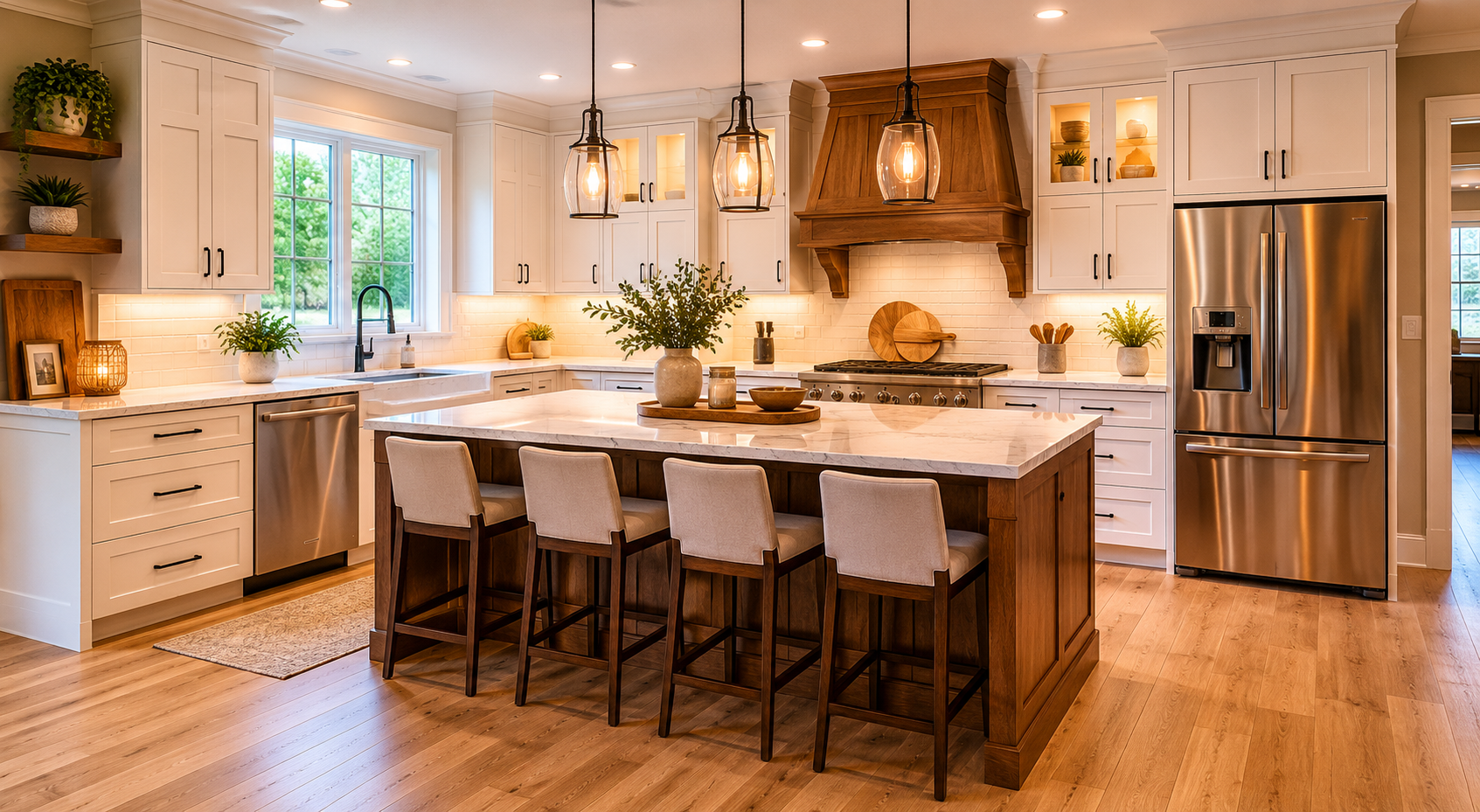
The type of cabinet you buy plays the biggest role in your overall spend. Stock cabinets from big-box stores can start as low as $60 to $200 per linear foot, but what you gain in price savings, you typically lose in quality and customization. Semi-custom cabinets usually fall between $100 and $650 per linear foot and give you more flexibility in sizing, finish, and features. Fully custom cabinets can run from $500 to $1,200 per linear foot or more.
At Spring Hill Design and Woodcraft, the approach is built differently. They use solid maple doors, dovetail drawer construction, and industry-leading Blum soft-close hinges and full-extension glides on every project. No particle board. No MDF. Just materials that are built to hold up over years of daily use. This kind of quality shows up in how the cabinets feel and function, not just how they look in photos. You can explore the full range of cabinet styles and finishes here to see what fits your vision.
Layout Size and Number of Cabinets
A small galley kitchen with 10 to 15 linear feet of cabinetry will naturally cost far less than an open-concept kitchen with an island, pantry, and full-height upper cabinets. If you are also adding a wet bar or built-in storage in other areas of your home, those add-ons carry their own material and labor costs. It is worth seeing real completed projects to understand what different layouts look like in practice. The before and after photos at Spring Hill Design and Woodcraft shows a wide range of kitchen sizes and styles, which makes it easier to relate your own space to actual results.
Installing Kitchen Cabinets: What the Process Actually Looks Like
A lot of homeowners underestimate how much work goes into a proper cabinet installation. It is not just setting boxes on a wall and calling it done.
Step 1: Design and Planning
Good installations start with a thorough design phase. The team at Spring Hill Design and Woodcraft meets with you in your home, not in a showroom. They bring curated samples, listen to your goals, and build 3D renderings so you can see exactly how your kitchen will look before any work begins. You can learn more about this process on their kitchen design services. This upfront investment in planning is what prevents costly mistakes during the actual install.
Step 2: Demo and Prep Work
Existing cabinets need to come out. Walls may need patching, leveling, or even minor structural work. Plumbing and electrical lines often have to be adjusted, especially if the new layout differs from the old one. This prep phase adds to the overall cost to install kitchen cabinets but is absolutely necessary for a clean result.
Step 3: Cabinet Installation
Once everything is prepped, the actual installation of upper and lower cabinets happens in a specific sequence to keep everything level, plumb, and aligned. Crown molding, toe kicks, and filler panels are added to give the finished look a built-in feel. Countertops are templated and installed after the base cabinets are secured. Spring Hill Design and Woodcraft handles all of this in-house, meaning you have one point of contact rather than juggling multiple contractors.
Step 4: Final Touches
Hardware, lighting, backsplash, and paint are often done in the final phase. These finishing details are what take a kitchen from functional to genuinely beautiful.
Cost of Kitchen Cabinets: Breaking Down the Numbers
Here is a realistic breakdown to help you plan your budget:
Labor Costs
Labor for cabinet installation typically runs between $50 and $100 per hour depending on your location and the complexity of the project. Most kitchen installations take two to four days for a crew of two. That puts labor somewhere in the range of $1,500 to $5,000 for the average kitchen.
Hidden Costs to Watch For
Many homeowners are surprised by costs they did not anticipate. These include disposal fees for old cabinets, permit fees depending on your municipality, unexpected repairs behind walls once demolition begins, and upgrades like pull-out shelves, lazy Susans, or soft-close hinges that are not always included in base quotes. Working with a team that is upfront about these items from day one makes a real difference. Reading through the FAQ on the Spring Hill Design and Woodcraft site gives you a solid sense of the questions worth asking before you commit to any contractor.
Value vs. Price
Cheaper is not always cheaper. Homeowners who go with the lowest bid often end up paying twice: once for the original job and again when things fail or look wrong. One of the most consistent themes in reviews of Spring Hill Design and Woodcraft is that their cabinet quality was noticeably better than cheaper alternatives, and the project came in on time and within budget. That consistency is hard to find and genuinely worth paying for.
Ready to Get a Real Number? Start Here
The cost to install kitchen cabinets is not a one-size-fits-all figure, and any contractor who quotes you a firm number without seeing your space is guessing. The right way to get an accurate estimate is to have a professional walk through your kitchen, understand your goals, and design something specific to your space and budget.
Spring Hill Design and Woodcraft serves homeowners across the greater Nashville area, including Franklin, Brentwood, Spring Hill, Murfreesboro, and Nashville. Their model eliminates showroom markups, which means more of your budget goes toward actual quality. If you are serious about getting a kitchen that works beautifully and lasts, contact the team and get the conversation started.